
Affiliate disclosure: This guide contains partner links. FoxyEco may earn a commission if you buy through them. Check the exact product, US availability and purchase terms before ordering.
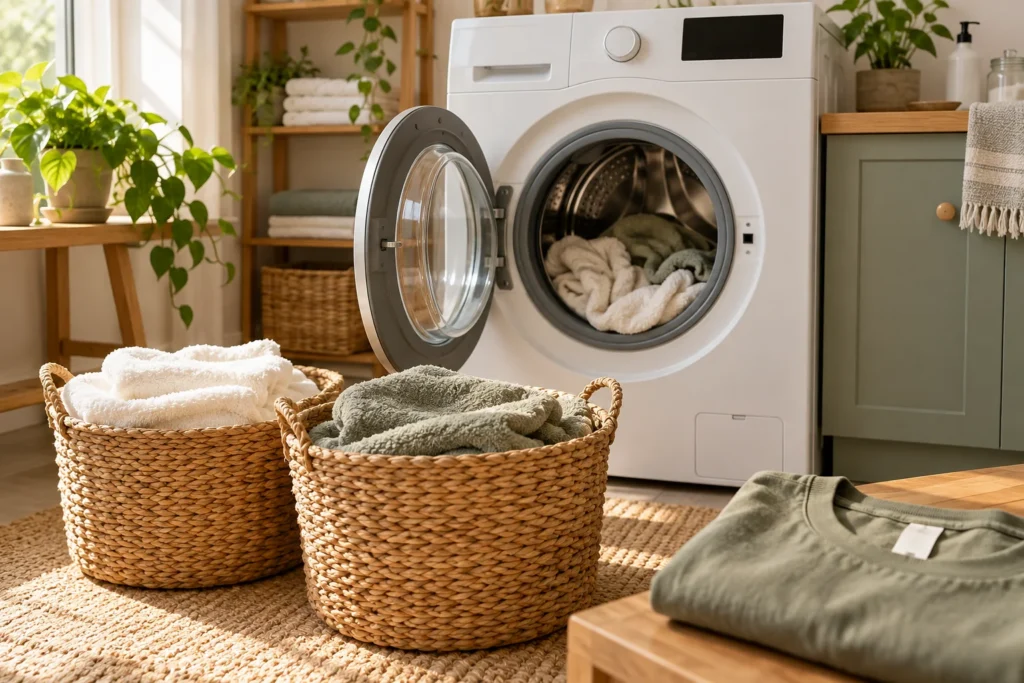
AI-generated editorial illustration. The scene is illustrative; it does not depict a FoxyEco product test or the exact appearance of a recommended model.
Laundry energy and garment life both start at the care label. Cold wash when fabric and detergent allow; reserve hotter programs for soils and instructions that require them. Full loads without crushing, correct dose, and drying plans that finish before mildew set in.
Sort by care and soil
Labels beat color-only sorting. Keep a cheat sheet for tricky items—wool, waterproof membranes, anything with “dry clean only” that you are tempted to ignore. Missing labels mean manufacturer lookup, not a random internet temperature.
Heavily soiled workwear and lightly worn tees should not share one “eco forever” preset if that creates rewash cycles.
Cooler when appropriate
ENERGY STAR backs cold wash where suitable. Retest stains with targeted treatment instead of forever-hot defaults. Hygienic or specialist requirements stay separate from ordinary energy advice—this guide does not set a sanitation temperature.
Measure one change
Illustrative 0.8 vs 0.5 kWh cycles differ by $0.06 at $0.20/kWh—your meter may disagree. Log several comparable loads. Incoming water temperature and options change results. Hardwired machines need documented figures or a pro, not improvised metering.
Fill without crushing; dose honestly
Capacity differs by program. Overloading undermines cleaning and can look like “I need a new washer.” Wait for a sensible load without leaving damp piles that mildew.
Follow detergent guidance for water hardness. More product is not more cleaning. When comparing a refill, count realistic washes, not package volume alone.
Plan drying before washing
Spin within label limits. Air-dry with airflow; indoor drying in a persistently damp room is incomplete. Clean dryer lint and follow venting instructions. Do not wash more than you can dry promptly.
Textiles and towels
Repair small failures early. If replacing towels, Read Sutera product and care information when comparing care needs—brand towels do not rewrite the rest of your laundry rules.
Questions people ask
Eco mode always best? Not if clothes stay dirty and you rewash.
Softener? Can hurt towel absorbency—follow labels.
Washer shopping? Measure first; repair may win.
Field notes from real households
Log the last three failures with dates, what you tried, and what actually fixed the symptom. Vague memory (“the dishwasher is bad”) leads to replacement shopping; dated notes (“Tuesday dinner plates still greasy after Eco, spray arm blocked by a ladle”) lead to a five-minute fix.
Trial any change for a set window—two weeks of laundry, three windy nights, one billing cycle—before buying the next accessory. Brief guests and housemates on the one critical habit so your experiment is not undone on day two.
Keep manuals, receipts, and a one-page household note together. The next person should continue the same experiment without guessing which pouch, seal, or program you chose.
Seasonal transitions and travel weeks cause most regressions. Schedule a five-minute inspection then: bags, seals, sensors, charge state, and the drawer where “spare” packaging goes to die.
Practical scenarios
Peak occupancy: Holidays and remote-work clusters need different settings than empty weekdays. Overload a machine or skip a seal check when eight people are showering and you will recreate the original problem.
Weather extremes: Cold adhesive fails, batteries show different voltages, drafts roar, and indoor drying saturates rooms. Do not judge a product only on a mild weekend.
Shared spaces: Write a default plus temporary overrides. “Eco unless towels” beats an argument every Sunday night.
Evening triage: Name the failure, find the manual, do allowed checks only, photograph, decide, calendar a verify date. Keep consumables next to the equipment they serve.
Common pitfalls
Buying before measuring. Trusting packaging icons without local verification. Skipping a second test after a fix. Storing spare parts unlabeled. Optimizing price or “natural” while ignoring the constraint that actually failed—fit, drying space, charger match, or handle strength.
Another pitfall: collecting ten half-solutions (bags, seals, pouches, sensors) instead of finishing one routine that people will repeat. Finish beats accumulate.
If a product page and your manual disagree, trust the manual for the unit you own, then ask the manufacturer in writing before forcing a connection, seal, or dose.
More scenarios that break the default plan
Guest weekends: brief visitors on the one rule that matters—bags by the door, fan after showers, no stacking on spray arms, no blocking vents on a battery.
Move-in or renovation dust: filters, seals, and sensors fail early; schedule an extra cleaning pass rather than blaming the product on day thirty.
Shared laundry or kitchen: post the two programs you actually use and the dose mark on the detergent bottle. Mystery settings create rewash waste.
Storm weeks: drafts, moisture, and outage prep collide. Check weatherstripping, dehumidifier drains, and battery charge the day before the forecast, not during the outage.
End-of-season sports or school gear: suddenly you have mud, extra loads, and forgotten bottles in bags. Retire damaged gear to the correct stream instead of stuffing another closet.
If two people disagree about “eco” settings, write a default and a temporary override. Unspoken rules do not survive Thursday night fatigue.
Failure modes worth logging
Write down the last three times this problem cost you time or money. Specific dates beat vague frustration.
After any fix, schedule a verify date. Many solutions look fine until the next full load, windy night, or guest weekend.
Brief everyone who shares the space. Put the rule where people already look.
Seasonal and occupancy notes
Peak-occupancy days stress systems differently from empty weekdays. Weather extremes change material behavior, battery voltage, draft paths, and drying times.
Travel weeks are when sensors go quiet, bags stay home, and packaging accumulates. Leave a short checklist for whoever remains.
Decision checklist
- Name the failure in one sentence.
- Find the exact manual, label, or local rule.
- Do only allowed checks.
- Photograph labels when useful.
- Decide: keep, repair, refill, replace, or stop buying.
- Calendar a verify date.
If a product page and your manual disagree, trust the manual for the unit you own.
Measured laundry example
Illustrative: 0.8 kWh vs 0.5 kWh wash cycles at $0.20/kWh differ by $0.06 per load. Over 300 loads that is about $18/year—meaningful only if clothes still clean so you do not rewash.
Weigh a typical mixed load once if your machine has a scale or you use a luggage scale; compare to the program’s capacity guidance so “full” is not “packed solid.”
Sources
Related guides
- Bedding Fibers: Compare Care and Useful Life, Not Hype
- Repair a Garment Before Shopping for Its Replacement
Verified Eco Recommendation: BLUETTI
High-efficiency LiFePO4 portable power stations, solar generators, and home battery backup systems.
Explore BLUETTI Official Store →