
Affiliate disclosure: This guide contains no affiliate links.
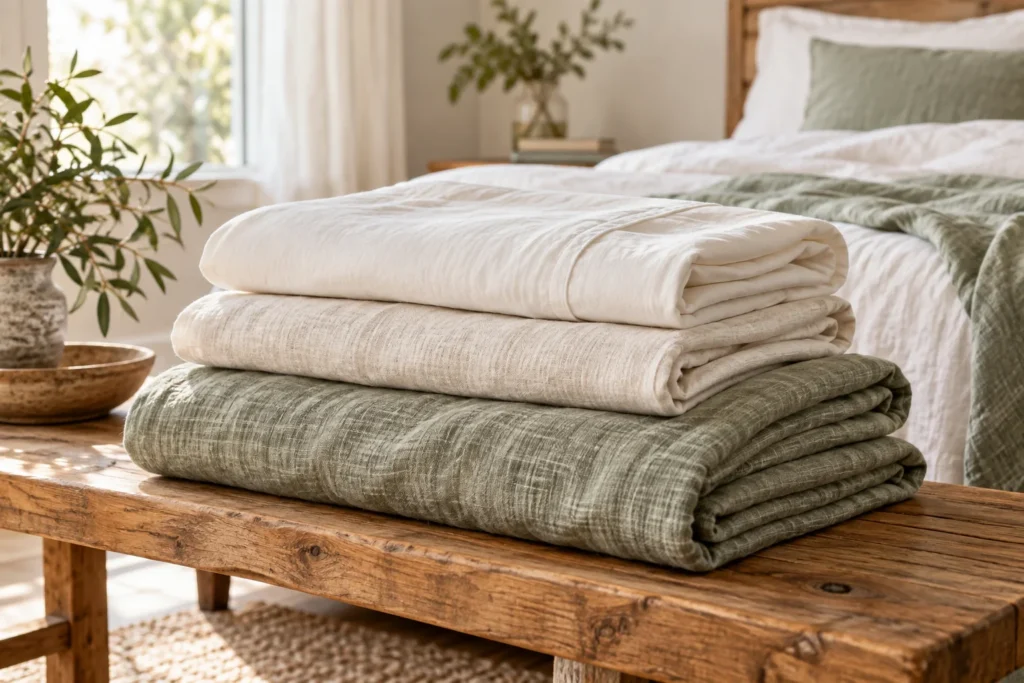
AI-generated editorial illustration. The scene is illustrative; it does not depict a FoxyEco product test or the exact appearance of a recommended model.
Bedding lasts when it fits the mattress you own, survives the wash routine you will actually run, and still feels fine to the person sleeping in it. Thread-count bragging and “hotel luxury” copy do not measure pocket depth, shrinkage, or whether your dryer will cook the elastic. Skip sleep-miracle claims; compare construction and care.
Measure the real bed
Record mattress length, width, and depth including any topper. Fitted-sheet pockets that are too shallow pop off at 2 a.m.; too deep and you get fabric bunches. For duvet covers, measure the insert, not the marketing size name—“queen” differs across brands and countries.
Check what the set includes. Extra shams do not replace a missing fitted sheet. Avoid buying a second set only for color match if storage is already full of unused textiles.
Read fiber content for every layer
Face fabric, piping, and elastic can differ. A “linen” headline may be a blend. Keep the label photo in your phone. Thread count is not a durability score—tight, even weave and strong seams matter more than a marketing number.
Let the care label veto the purchase
IKEA’s RUNDHAGTORN listing is one example with explicit fiber and care detail—use it as a reminder to read product-specific instructions, not as a universal linen-cotton rule. If the label wants line-dry only and you live in a humid closet apartment, believe the conflict now.
Ask how drying works in your worst season. A bulky duvet cover that needs two days on a tiny rack becomes a weekly stressor.
Match washer capacity to wet bulk
Wet cotton expands. An item can physically fit the drum and still violate load guidance, leaving detergent residue and wrinkled elastic. If the set needs professional cleaning, price that into ownership before you fall for a sale.
Keep enough rotation that one set can dry while another is on the bed. The right number depends on laundry days—not Instagram cupboard goals.
Repair the cheap failures
Loose buttons and open seams are early, cheap fixes if surrounding fabric is sound. Save spare buttons. If fabric is thinning at the center of the fitted sheet, reinforcement patches may only delay the inevitable—note why it failed when you replace it (fit, bleach damage, pet claws).
Cost per rotation, honestly
Example: $60 set ÷ 100 wash cycles = $0.60 per cycle before utilities. A $40 set that dies at 25 cycles is $1.60 on the same narrow math. These service counts are worksheets, not fiber forecasts. Track your own failure mode instead of trusting “premium lasts longer” ads.
Wellness and green language
Texture preference is real. Medical cure claims are not this guide’s job. FTC green-claim rules still want scope and substance—ask what a certification covers on the exact SKU.
Scenario: the sheet that never stays on
You bought deep-pocket sheets for a thick mattress; the topper added another two inches the listing ignored. The sheet pops nightly. Measure total height again, or use suspenders designed for sheets—another purchase only after the measurement is honest.
Questions shoppers actually ask
Percale vs sateen? Weave and hand-feel differ; neither automatically lasts longer—check care and reviews for pilling on your washer type.
Do I need fabric softener? Often no for towels and some sheets; follow the label—softener can hurt absorbency and flame resistance on certain textiles.
When to replace pillows vs sheets? Different wear clocks; lumpy pillows are a comfort/hygiene call separate from sheet fabric.
Build a no-drama laundry plan
Assign wash day relative to sheet changes so you are never forced into a hot quick-wash that fights the label. Keep a mesh bag for pillowcases with zippers so they do not snag other laundry. If you share machines in a building, do not leave damp bedding in the drum—timers lie and mildew does not.
Stain response: blot, check the fiber chart, and avoid setting protein stains with hot water. For duvet inserts, follow the insert’s own label; stuffing a non-washable insert into a washable cover’s routine is how clumps form. Sun-airing helps odor but is not a substitute for washing when the label allows wash.
When comparing two sets online, open the Q&A for pocket-depth complaints and shrinkage notes. If dozens of buyers mention “ran small,” size up or pick another product rather than hoping your dryer is gentler.
Storage: clean and dry only. Cedar or lavender is optional; plastic bins in damp basements are how mystery smells appear in spring.
If you use a heated mattress pad or adjustable base, confirm sheet compatibility and clearance before ordering deep pockets that still snag motors. Keep cords untangled when changing sheets so you do not yank a controller off the nightstand. For kids’ beds, prefer simpler closures over decorative buttons that become choking hazards if they detach.
Finally, change one variable at a time when testing comfort: new sheets plus new pillows plus a new duvet makes it impossible to know what helped. Keep tags until you are sure, and note the purchase date in a phone reminder for the approximate replacement horizon you expect based on past sets—not on advertising.