
Affiliate disclosure: This guide contains no affiliate links.
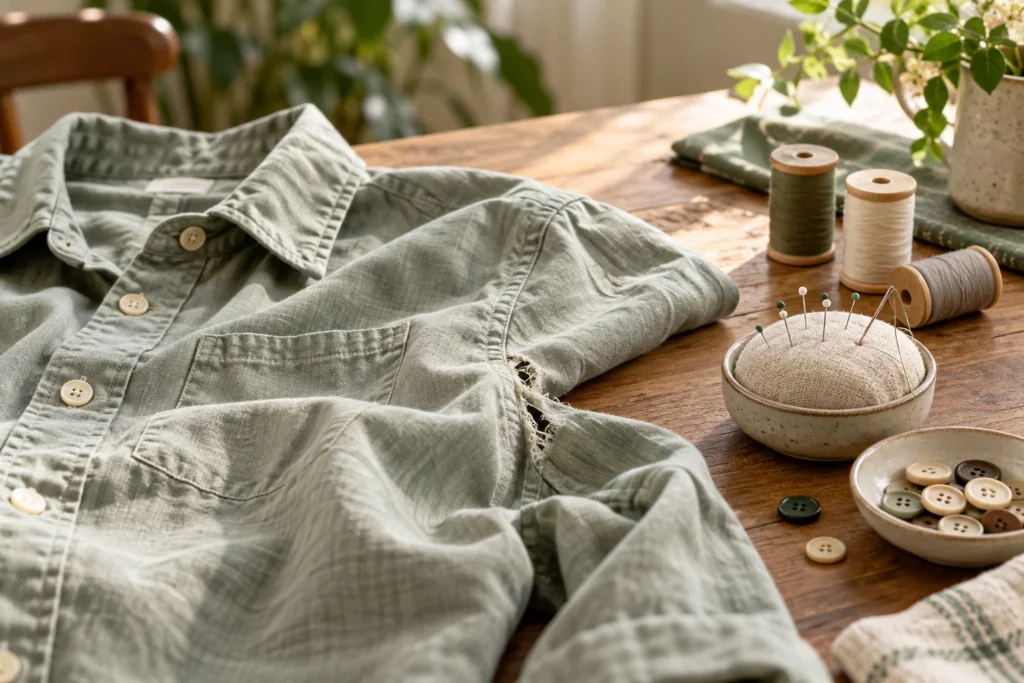
AI-generated editorial illustration. The scene is illustrative; it does not depict a FoxyEco product test or the exact appearance of a recommended model.
A loose button or open seam is a fifteen-minute save; a shredded crotch on cheap stretch fabric may not be. Inspect fabric strength around the damage, estimate wear remaining, and compare tailor quotes with replacement cost and how often you wear the piece.
Triage
Stable weave with local damage → mend. Thin fabric tearing elsewhere → maybe retire. Fit problems → alter if the garment is worth it.
Home vs tailor
Buttons, hems, simple seams: home. Zippers on structured jackets, invisible zips, leather: tailor. Ask for a quote before authorizing.
Cost example
Tailor $25 seam vs $80 new shirt you wear weekly → mend. $40 repair on a $30 impulse buy you wore twice → replace or donate if wearable.
Prevention
Read care labels. Use mesh bags for delicates. Fix small issues before laundry enlarges them.
Questions people ask
Visible mending? Valid aesthetic choice; not required for strength.
Thrift flips? Budget alteration cost into the thrift price.
Warranty clothing? Some outdoor brands repair—use that first.
Field notes from real households
Write down the last three times this problem annoyed you: dates, what failed, and what you tried. Patterns appear fast. Take that log shopping so the product’s care steps match your recorded failure—not a lifestyle photo.
After you change something, give it a defined trial window. Judge against the log. Share the working setup with anyone else who uses the space so a roommate does not undo it.
Budget a small contingency of spare parts or consumables so busy months do not trigger panic duplicate orders.
Seasonal and travel checks
Before heat waves, freezes, or trips, run a five-minute inspection tied to this topic. Brief guests on the one switch or bin that matters. When you return, assume something drifted and walk a short homecoming checklist.
Keep receipts and manuals in one folder—photos are fine—so the next quote starts from facts.
If two options seem equal, pick the one you can maintain with tools and time you already have.
Re-read the model-specific manual when seasons change; generic blog tips age badly across product revisions.
Practical scenarios
Scenario A: you notice the problem only on weekends when the house is full. That points to occupancy-driven load—more showers, more laundry, more open fridge doors—not a random product defect. Adjust routines for peak days before buying capacity you will not use Monday through Thursday.
Scenario B: the issue appears after a cold snap or heat wave. Materials shrink, seals harden, batteries sag, and fans work harder. Season-proof the setup with the maker’s temperature limits in mind rather than blaming the brand’s average-review score.
Scenario C: two household members disagree on the “right” setting. Write a default, allow temporary overrides, and review weekly. Silent wars over thermostats, wash temperatures, or bin sorting create more waste than any single imperfect tool.
Checklist you can finish in one evening
1) Name the failure in one sentence. 2) Find the model manual. 3) Complete only the user-allowed checks. 4) Record measurements or photos. 5) Decide repair, adjust, replace, or stop. 6) Set a calendar reminder to verify the fix. Crossing those six steps prevents both neglect and endless tinkering.
If you stall at step 2 because the manual is missing, search the maker’s site with the serial plate photo before inventing a procedure from social video. Wrong disassembly can void warranties and create unsafe assemblies.
Keep consumables (filters, batteries, tape, detergent dose cups) with the equipment they serve. Orphan supplies in a junk drawer are how routines die.
Confirm local rules and model-specific limits before copying a neighbor’s setup—buildings and product revisions differ.
Common pitfalls
Pitfall one: buying before measuring. Tape measures and five minutes of observation prevent returns.
Pitfall two: trusting packaging icons without local verification—recycling marks, “universal fit,” and “eco” badges all need scope checks.
Pitfall three: skipping the second test after a fix. Many repairs look good until the next full load, full shower, or full workday.
Pitfall four: storing spare parts unlabeled. A mystery bag of screws and seals wastes the original repair.
Pitfall five: optimizing one metric (price, weight, “natural”) while ignoring the constraint that actually failed (fit, drying space, charger match).
More scenarios that break the default plan
Guest weekends: brief visitors on the one rule that matters—bags by the door, fan after showers, no stacking on spray arms, no blocking vents on a battery.
Move-in or renovation dust: filters, seals, and sensors fail early; schedule an extra cleaning pass rather than blaming the product on day thirty.
Shared laundry or kitchen: post the two programs you actually use and the dose mark on the detergent bottle. Mystery settings create rewash waste.
Storm weeks: drafts, moisture, and outage prep collide. Check weatherstripping, dehumidifier drains, and battery charge the day before the forecast, not during the outage.
End-of-season sports or school gear: suddenly you have mud, extra loads, and forgotten bottles in bags. Retire damaged gear to the correct stream instead of stuffing another closet.
If two people disagree about “eco” settings, write a default and a temporary override. Unspoken rules do not survive Thursday night fatigue.
Field notes
Log the last three failures with dates. Shop against that log. Trial any change for a set window. Brief everyone who shares the space. Keep manuals and receipts together.
Seasonal transitions and travel weeks cause most regressions—schedule a five-minute inspection then.
Evening checklist: name the failure, find the manual, do allowed checks only, photograph, decide, calendar a verify date.
Peak-occupancy days need different settings than empty weekdays. Weather extremes change material and battery behavior.
Do not optimize the wrong metric: price without fit, natural without care access, or capacity without a place to store it.
When mending beats shopping
A straight seam tear on otherwise sound fabric is often a twenty-minute fix. A crotch blowout on thin fashion denim may not repay the hours. Factor skill time, thread and notions cost, and how often you wear the item.
Keep a small tin: needles, polyester thread, buttons salvaged from retired shirts, and iron-on patches that match your actual clothes—not a fantasy craft kit.
Measured mending example
Illustrative: 20 minutes to resew a seam with $3 of thread versus $48 to replace a jacket you wear 2 times per week. If the fabric is already thinning at the stress point, budget for replacement within 6 months anyway.
Count wears after the fix for 8 weeks. If the repair fails twice, escalate to a tailor quote or retire the garment.