
Affiliate disclosure: This guide contains no affiliate links.
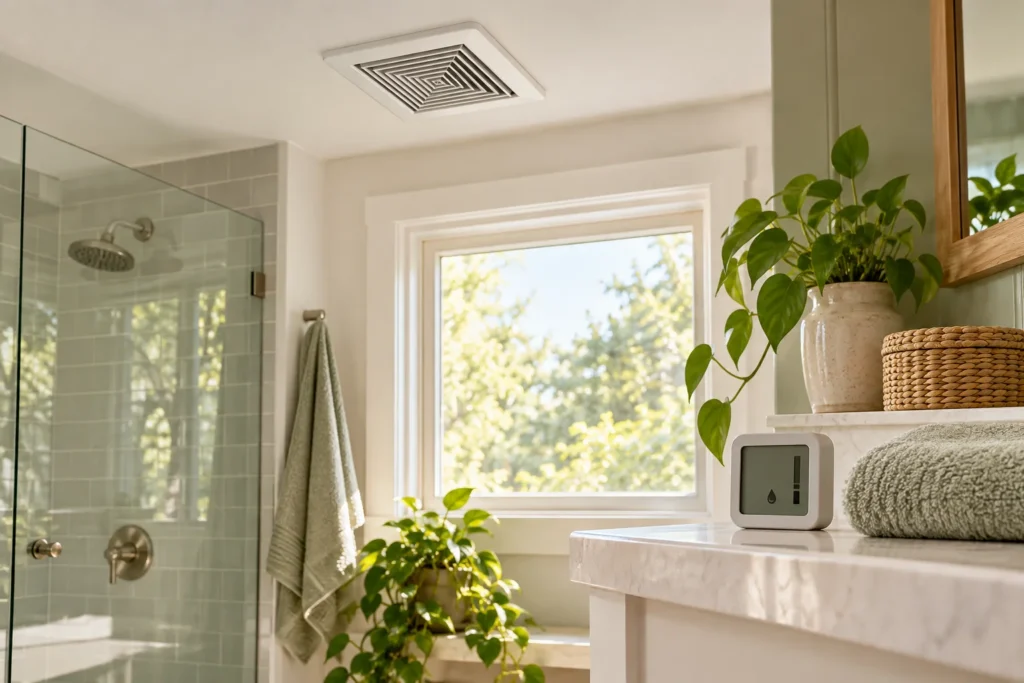
AI-generated editorial illustration. The scene is illustrative; it does not depict a FoxyEco product test or the exact appearance of a recommended model.
Bathroom moisture is not a personality flaw—it is physics. Hot showers dump water vapor into a small room. If the exhaust fan is weak, noisy, or never run long enough, you get peeling paint, swollen cabinets, and that musty towel smell no detergent fully erases. Make the fan part of the shower routine the way you make shutting off the water part of it.
This guide covers fan function checks, how long to run after showers, measuring humidity trends, spotting leaks versus steam, and when to call an electrician or mold assessor.
Confirm the fan actually moves air
Hold a tissue near the grille with the fan on. It should pull strongly toward the grille. If it barely flutters, the fan may be dying, the duct may be crushed, or the damper may be stuck. Listen for grinding—bearings fail before homeowners notice humidity climbing.
Find where the duct terminates. Roof caps clog with lint and nests. A fan that blows into an attic without a proper termination dumps moisture into insulation—worse than no fan.
Build a timed habit
Run the fan during the shower and 20–30 minutes after, or until the mirror clears and the hygrometer trends down. A $15 plug-in timer or a fan with a built-in overrun timer beats relying on memory. If the switch is outside the room, put a sticky note until the habit sticks.
In winter, balance moisture removal against heating the bathroom with the door cracked if your HVAC design allows—but do not disable the fan “to save heat” if walls are sweating.
Measure, do not guess
Place a small hygrometer in the bathroom for a week. Note peaks after showers and recovery time. If relative humidity stays elevated hours later, increase runtime or investigate ventilation. Compare with a hallway reading so you know the bathroom is the outlier.
Steam vs leak
Condensation on cold windows after showers is common. Water stains that grow without showers, soft drywall at the tub edge, or black growth behind the vanity point to leaks. Fans help steam; they do not fix failed caulk or a dripping supply valve.
Clean the grille without wrecking the motor
Power off. Vacuum dust from the grille. Wash removable covers per the maker. Do not spray cleaner into the motor. If you remove the blower wheel, photograph wire positions first.
Noise is information
A suddenly louder fan can mean a failing motor or a disconnected duct flapping. A quieter fan that used to roar may mean the wheel is clogged and barely spinning. Either way, humidity climbs while you “get used to” the sound.
Scenario: apartment with a lazy fan
You shower daily; the landlord says the fan “works.” Tissue test fails. Document with video, request service, and use a door gap plus portable dehumidifier temporarily—without blocking egress. Keep written requests.
Scenario: guest bath used twice a year
Infrequent use still needs a post-shower run when guests visit. Otherwise towels left hanging create odor that guests notice first.
Questions people ask
Is a bigger CFM fan always better? Only if ducting and makeup air support it. Oversizing into a tiny duct can be noisy and ineffective.
Can I use the HVAC return instead? Usually no—bathroom moisture and odors need dedicated exhaust to outdoors.
What humidity target? Comfort and building materials vary; watch trends and visible condensation rather than obsessing over one number.
When to escalate
Persistent mold, chronic leaks, or electrical issues around the fan need qualified help. DIY fan swaps on unfamiliar wiring can be unsafe—hire when unsure.
Date-stamp the last time you verified this routine. Shared households need a note that survives one person’s memory.
When product pages disagree with the manual in the box, trust the boxed manual for your exact revision and region.
Photograph nameplates, error codes, and before/after conditions so a technician or future you can reconstruct the story.
Field notes from real households
Write down the last three times this problem annoyed you: dates, what failed, and what you tried. Patterns appear fast—“always after guests,” “only in January,” “only the left side.” That log beats a vague feeling that “everything is broken.”
When you shop, take the log with you (or open it on your phone). Ask whether the product’s care or install steps match the failure you actually recorded. If the answer is no, keep looking. Marketing rarely lists your exact failure mode.
After you change something—new seal, new setting, new placement—give it a defined trial window (three showers, one billing cycle, two weeks of commuting). Judge success against the log, not against an influencer’s thirty-second clip.
Share the working setup with anyone else who uses the space. A perfect personal routine collapses when a roommate resets the switch, moves the sensor, or washes everything on hot “because it looks cleaner.”
Budget a small contingency: tape, spare filters, a backup towel, an extra box size. Continuity is how less-waste routines survive busy months without a panicked one-click order of five duplicates.
What “good enough” looks like
You are not aiming for a showroom. You are aiming for fewer emergencies, clearer decisions, and gear that stays in service. If a cheaper option meets the measured need and you will maintain it, that can beat a premium product that intimidates you into neglect.
Document warranties and return windows on a calendar. Many “bad buys” are simply unused return periods. Set a reminder for day five and day twenty after delivery while issues are still obvious.
Field notes
Log the last three failures with dates. Shop against that log. Trial any change for a set window. Brief everyone who shares the space. Keep manuals and receipts together.
Seasonal transitions and travel weeks cause most regressions—schedule a five-minute inspection then.
Evening checklist: name the failure, find the manual, do allowed checks only, photograph, decide, calendar a verify date.
Peak-occupancy days need different settings than empty weekdays. Weather extremes change material and battery behavior.
Do not optimize the wrong metric: price without fit, natural without care access, or capacity without a place to store it.
Apartment and shared-bath notes
If you cannot replace the fan, document airflow with a tissue video and request maintenance in writing. Use a door gap and shorter showers as interim controls—not as a permanent substitute for outdoor exhaust.
Shared bathrooms need a posted overrun time. Guests will not invent your thirty-minute rule.