
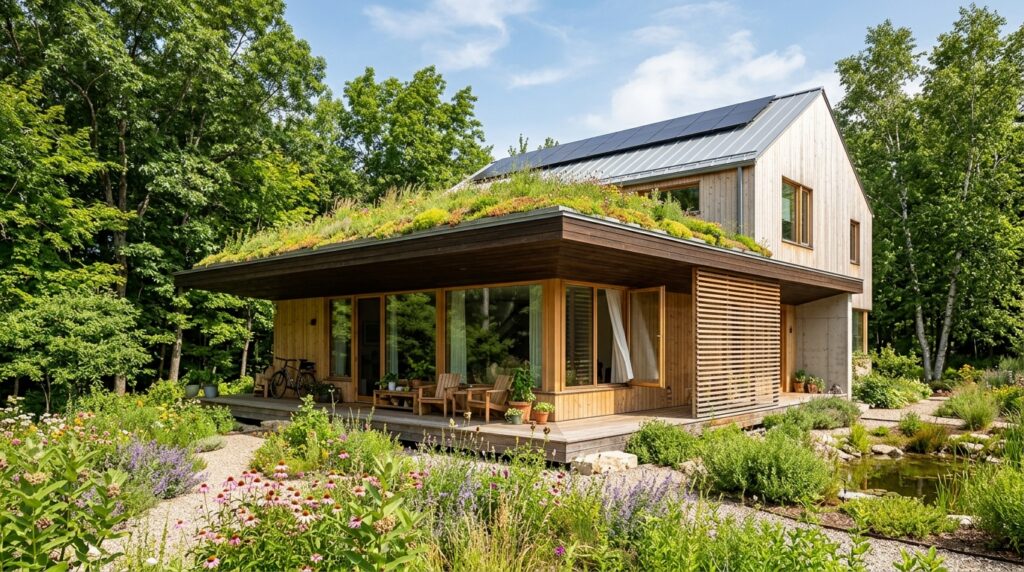
Staying cool during scorching summer heat waves does not have to mean paying exorbitant monthly electric bills or overworking loud air conditioning units.
Disclosure: Independent CleanTech research and passive design analysis. We do not accept sponsored hardware rankings. All energy recommendations prioritize passive thermal physics and off-grid resilience.
Passive home cooling is the art and science of keeping your living spaces comfortable using natural environmental thermodynamics—radiation, convection, thermal mass, and evaporative cooling—rather than mechanical compressors. Here is how homeowners and apartment renters can harness passive cooling in plain, everyday language.
1. The Core Physics: How Buildings Heat Up and Cool Down
Heat always moves from warmer objects to cooler objects in three distinct ways:
- Radiation: Direct electromagnetic infrared energy from the sun striking your roof, exterior walls, and glass windows.
- Conduction: Heat transferring through solid materials—such as hot brick walls warming your interior drywall hours after the sun goes down.
- Convection: Heat rising and transferring through moving air. Warm air naturally climbs toward the ceiling, while cooler air settles near the floor.
Understanding these three mechanisms allows you to control indoor temperature with simple daily habits and zero electricity expenditure.
2. Step-by-Step Night Flushing: Thermal Mass Management
In most continental and temperate climates, there is a significant temperature drop between midday and midnight (called the diurnal temperature swing). Night flushing takes advantage of this free cold air:
- The Evening Purge: As soon as the outdoor temperature drops below your indoor temperature (typically around 8:00 PM or after sunset), open windows on opposite sides of the home.
- Create the Stack Chimney Effect: Open low windows on the cool, shaded north side of your ground floor, and open high windows on the upper floor. Warm, buoyant air escapes through the upper windows, pulling a steady, cooling breeze across the lower level.
- Cool the Thermal Mass: Leaving windows open overnight cools the heavy structural materials of your home—concrete foundations, tile floors, plaster walls, and furniture. These chilled surfaces act as thermal sponges the following day.
- The Morning Lockout: At dawn, before the morning sun begins warming the outdoor air, seal all windows and exterior doors shut. Lower reflective shades or cellular blinds immediately. The chilled thermal mass will absorb indoor warmth throughout the day, keeping rooms comfortable until late afternoon.
3. Window Shading: Stop Heat Before It Enters
The single biggest driver of indoor heat buildup is solar radiation passing through window glass (solar heat gain). Once sunlight passes through the glass pane, it turns into trapped infrared heat that cannot easily escape (the greenhouse effect).
Exterior Shading is 80% More Effective than Interior Curtains: Installing outdoor bamboo roll-up blinds, exterior fabric awnings, or solar shade mesh outside your south- and west-facing windows stops up to 80% of heat before it touches the glass. If exterior shading is impossible, install honeycomb cellular blinds with reflective backing inside.
4. Microclimate Biodiversity: How Greenery Lowers Local Temperatures
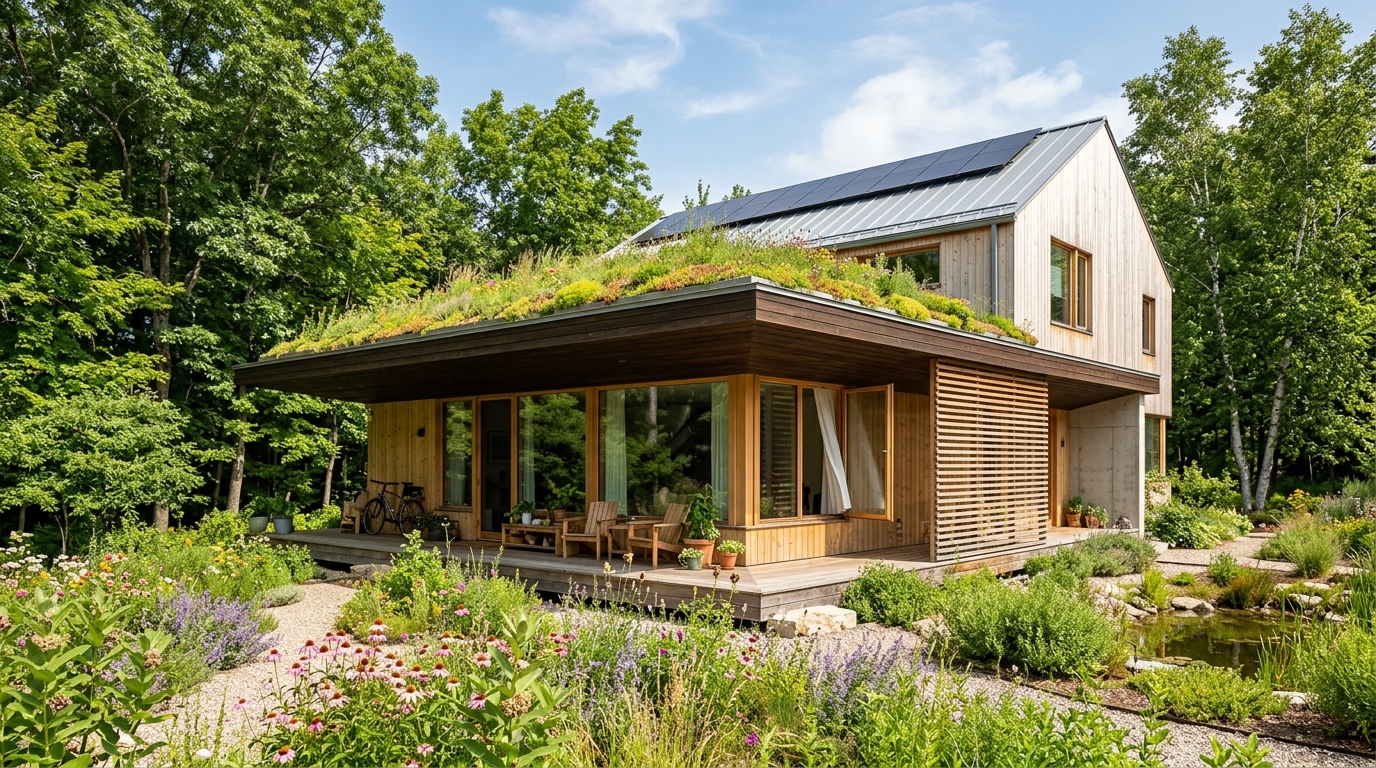
Urban and suburban neighborhoods dominated by concrete driveways and asphalt roads suffer from the Urban Heat Island effect, recording temperatures 5°F to 15°F higher than nearby countryside. Introducing biodiversity into your home perimeter provides natural, self-sustaining climate control:
- Evapotranspiration Cooling: Plants absorb water through their roots and release it as moisture vapor through their leaves. A single mature deciduous tree on the southwest corner of a home can transpire hundreds of gallons of water daily, acting as a giant natural swamp cooler that lowers surrounding ambient air temperature by 3°F to 9°F.
- Native Ground Covers vs. Bare Dirt or Rock: Rock mulches and gravel store massive amounts of daytime solar heat and radiate it into your home all night. Replacing rock landscaping with native perennial ground covers, clover, or organic wood mulch keeps the soil cool and moist.
- Deciduous Canopy Benefits: Planting deciduous trees (such as maple or oak) provides dense shade all summer, yet sheds leaves in autumn to allow warming winter sunshine to pass directly through your windows when you need it most.
5. Resilient Clean Energy Pairing: Battery Storage + DC Airflow
During peak heat events, municipal electrical grids experience rolling brownouts and triple-tier peak kilowatt-hour pricing. Pairing a compact LiFePO4 portable power station (such as an EcoFlow Delta or Bluetti AC-series) with brushless DC fans provides continuous comfort on less than 35 watts of power. Modern DC ceiling fans and oscillating circulators move massive volumes of air while consuming 85% less energy than standard AC-motor fans, running for up to 48 hours on a single solar charge.
Passive Cooling Performance Overview
| Passive Strategy | Indoor Temperature Drop | Implementation Cost | Electricity Used |
|---|---|---|---|
| Overnight Stack Ventilation | 4°F to 8°F | $0 (Free) | 0 kWh |
| Exterior Solar Shading | 5°F to 10°F | Low ($30–$120) | 0 kWh |
| Perimeter Tree Canopy & Biodiversity | 3°F to 9°F ambient | Moderate ($80–$250) | 0 kWh |
| DC Fan Wind-Chill Effect | 4°F perceived cooling | Low ($40–$90) | 0.02 kWh |