
Section 1
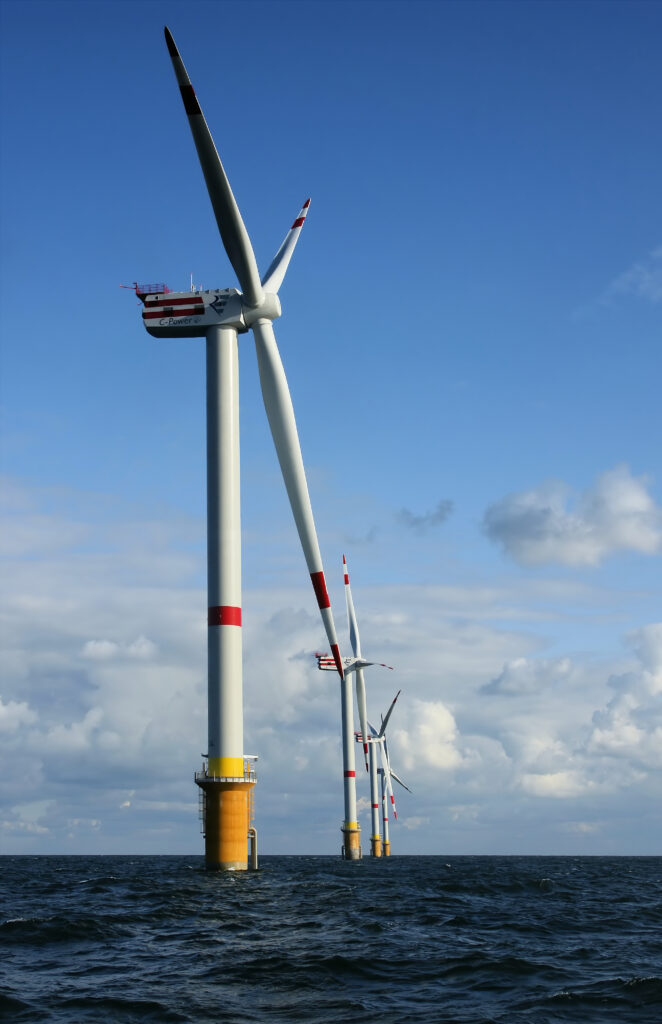
The Promise of the Open Sea While onshore wind farms have become a familiar sight across the globe, the true frontier of renewable energy lies offshore. Out in the open ocean, winds are significantly stronger, more consistent, and less turbulent than they are over land. This consistency is crucial for baseload power generation, meaning offshore wind farms can provide a more reliable stream of electricity that mimics the steady output of traditional fossil fuel power plants. As coastal populations surge and land becomes increasingly scarce and expensive, looking out to sea offers a vast, untapped resource. Modern offshore wind turbines are engineering marvels, reaching heights that rival skyscrapers, with blades spanning the length of football fields. A single rotation of these massive turbines can power a standard home for an entire day, making them a cornerstone of the global transition toward sustainable energy.
Section 2
Overcoming Technical Hurdles Harnessing the power of the ocean is not without its challenges. The harsh marine environment, characterized by corrosive saltwater, massive waves, and hurricane-force winds, demands incredibly robust engineering. Installing traditional ‘fixed-bottom’ turbines, which are driven deep into the seabed, is expensive and limited to relatively shallow waters, typically less than 60 meters deep. However, many of the world’s most densely populated coastlines, such as those in California and Japan, drop off steeply into deep water. To tap into these wind resources, engineers have developed floating wind turbines. These innovative structures are mounted on massive buoyant platforms that are moored to the ocean floor with heavy cables.
Section 3
This technology allows wind farms to be deployed in deep waters further offshore, where winds are even stronger and visual impact from the coast is virtually eliminated. Ecological Impacts and Mitigation While offshore wind is a clean energy source, the construction and operation of massive turbines can impact marine ecosystems. The noise generated during the driving of turbine foundations into the seabed can disrupt the communication and navigation systems of marine mammals, such as whales and dolphins. Additionally, rotating turbine blades pose a collision risk to migratory seabirds. However, the industry is actively developing mitigation strategies. ‘Bubble curtains’—rings of perforated pipes that release compressed air bubbles around the construction site—are used to muffle underwater noise.
Section 4
Advanced radar and camera systems are being deployed to detect approaching flocks of birds and automatically shut down turbines. Interestingly, once operational, the underwater structures of offshore wind farms often act as artificial reefs, providing habitat and shelter for a variety of marine life and potentially boosting local fish populations. The Economics of Scale The cost of offshore wind energy has plummeted over the past decade, driven by rapid technological advancements and economies of scale. As turbines have grown larger, their efficiency has increased exponentially. A single 15-megawatt turbine can replace several smaller, older models, reducing the overall cost of installation, cabling, and maintenance. Governments are recognizing this economic potential and are setting ambitious targets, auctioning off vast tracts of ocean for development.
Section 5
The supply chain is also maturing, with specialized installation vessels and dedicated port facilities being constructed worldwide. As the industry scales up, the levelized cost of energy (LCOE) for offshore wind is expected to drop below that of natural gas and coal in many regions, making it not just an environmentally sound choice, but a financially prudent one. Integrating the Grid The massive influx of electricity from offshore wind farms presents a unique challenge for terrestrial power grids. Connecting these remote wind farms to population centers requires laying hundreds of miles of high-voltage subsea cables, a complex and expensive undertaking. Furthermore, the variability of wind, even offshore, means that grid operators must develop sophisticated strategies to balance supply and demand. Solutions include expanding the grid to connect diverse energy markets, investing in large-scale battery storage, and utilizing excess wind power to produce green hydrogen through electrolysis. ‘Energy islands’—artificial hubs in the ocean that collect and distribute power from multiple surrounding wind farms—are also being conceptualized. These massive infrastructure upgrades are essential to fully integrate offshore wind into a resilient, decarbonized energy system.