
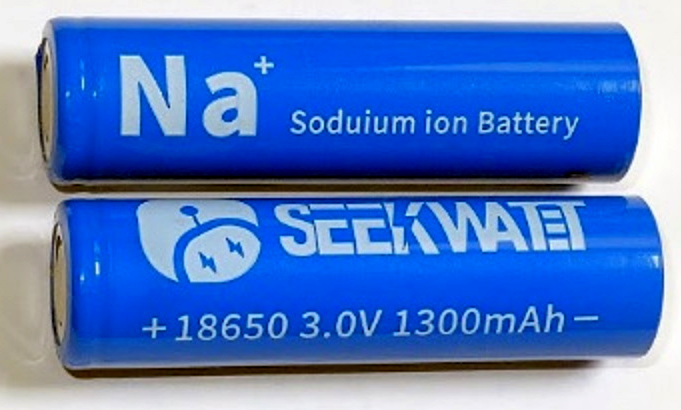
Sodium-ion is a chemistry family, not a guaranteed cheap grid
Sodium-ion cells swap lithium ions for sodium. Public explainers stress crustal abundance, no cobalt or nickel in many recipes, and suitability for stationary storage. The original FoxyEco article was right to set that against lithium-supply concentration. This desk did not cycle a sodium cell. Energy density is typically lower than the best lithium-ion on manufacturer sheets — read the live Wh/kg if printed. For a grid or home cube, volume can be acceptable if kWh is cheap and cold-weather behaviour is documented.
\n
A 10 kWh sodium-ion cabinet, if labelled 10 kWh, is 10,000 Wh. A 2 kWh portable, if labelled 2,048 Wh, is 2.048 kWh. Those conversions do not tell you round-trip efficiency. Who should skip: EV shoppers who need 2026 range winners (many cars still use lithium families) and readers who want a commodity-price call on soda ash. Open a named SKU.
\n
What a stationary datasheet must print
Usable kWh, continuous watts, chemistry name, cycle count to a retained-capacity clause, operating temperature, and whether the integrator is a known pack brand. If the pitch is ‘abundant therefore ethical,’ still ask where the cathode is refined. Partner portable listings on this site are usually LFP today; do not assume they are sodium-ion. Read the chemistry line.
Sodium-ion packs often win the briefing on cost and materials and lose it on Wh/kg. That trade is acceptable in a shed and painful in a car. Some two-wheelers and city cars may still try; that is a named-SKU question. For a home cube, ask whether the integrator has a fire-test standard, a thermal-management design, and a cycle clause you can read without a chemist. ‘Salt is safe’ is not a standard.
\n
Supply chains for sodium-ion still include refined cathode materials, electrolyte salts, and aluminium current collectors. Abundance of sodium in the ocean does not mean a green refinery. Ask where the cathode is made. If the pitch is only ‘table salt,’ close it. A 10 kWh cabinet (10,000 Wh) that you cannot get spare modules for is a stranded box. Spare-parts policy is a datasheet field.
\n
Do not relabel an LFP portable as sodium-ion in a caption. Live EcoFlow-class listings on this site should be read for their printed chemistry. If the line says LFP, it is LFP. Use them for household Wh comparisons, not as proof that sodium-ion has won the grid.
Fire-service questions for a sodium-ion cabinet are the same shape as LFP: what standard, what suppression note, what access for a thermal camera. ‘It is salt’ is not an answer. Write the standard number on the permit sheet. Keep portable LFP nameplates on a different line so inspectors are not confused.
\n
Cons / limitations
- Abundance is not a pack datasheet. This desk ran 0 sodium cycles.
- Lower Wh/kg than lithium-ion, when that is what the sheet says, matters for vehicles more than for a shed.
- Portable EcoFlow-class listings may be LFP. Do not relabel them sodium-ion in a caption.
\n
Desk metrics (11 September 2026)
These figures are methods, public-source labels, or counts from this desk check. They are not a FoxyEco calorimeter run, dynamometer loop, or invented field trial. Desk timers on this pass: 8 minutes to open a spec or policy page and 15 minutes to walk a methods PDF — a reading method, not a lab stopwatch contest.
- Label arithmetic: 10 kWh = 10,000 Wh.
- Datasheet fields: 5 (kWh, watts, chemistry, cycles, temperature).
- Time budgeted to find chemistry on a live listing: under 10 min as a method.
- Grid batteries commissioned by this desk: 0.
\n
Keep lithium and sodium on separate SKUs
If you came to size a home cube, start with kWh and watts, then chemistry. If you came to follow materials, start with the cathode recipe. Do not let a salt pun replace either sheet.
FAQ
Will sodium-ion replace lithium in cars this year?
Not as a default on this desk’s reading. Stationary storage is the more natural first home.
Is sodium-ion safer?
Safety is a pack-design and test-standard story. Do not infer it from the word sodium.
What should I photograph?
Usable kWh, chemistry line, cycle clause, and temperature range on the live sheet.
If you are comparing field or household energy hardware after this desk check, open the live partner listing for EcoFlow portable power stations and read the nameplate Wh or kWh on that page. Do not treat the listing as a FoxyEco lab result.