
Section 1
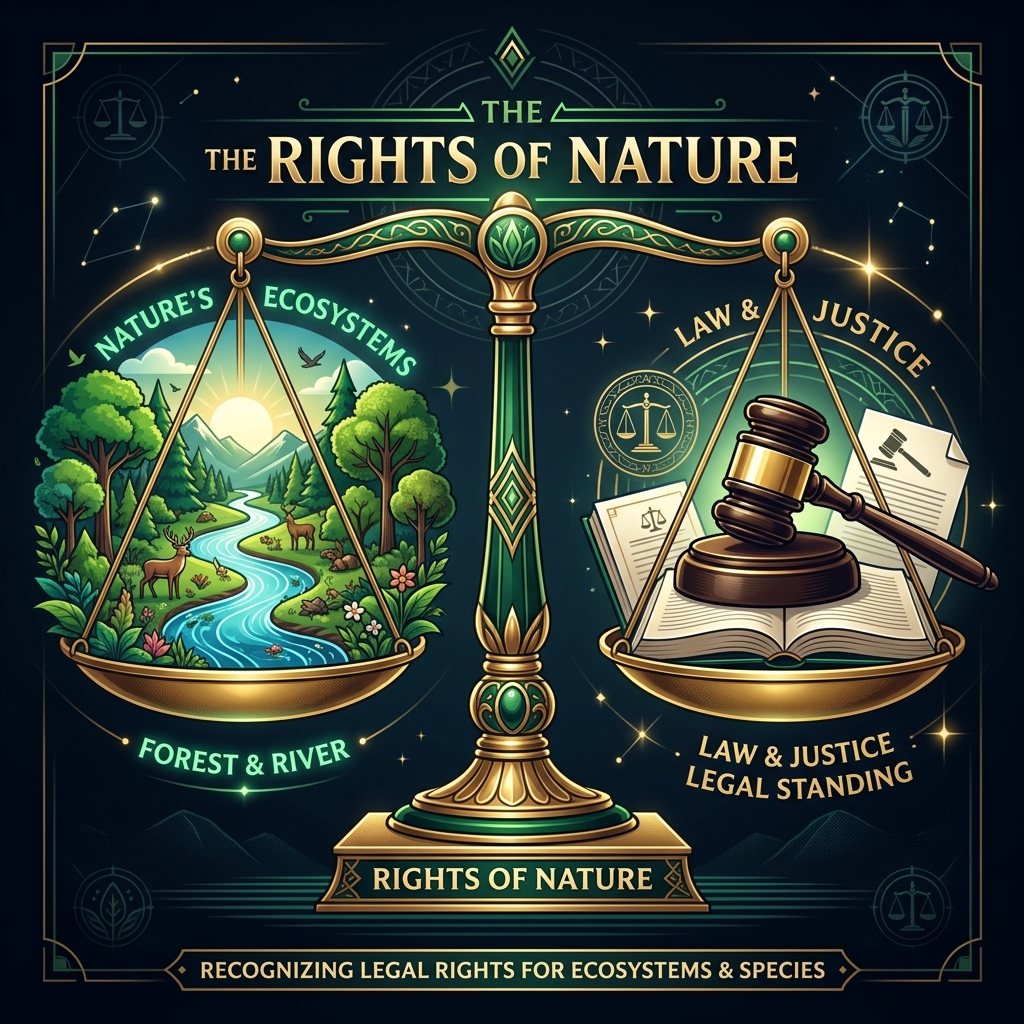
Section 1 Introduction For Centuries, Western legal systems have treated nature as property—a resource to be owned, exploited, and managed by humans. Under this anthropocentric framework, environmental laws regulate the rate of destruction rather than preventing it, and citizens can only sue if they can prove damage to human health or economic interest. A growing legal movement, however, is challenging this paradigm by advocating for the Rights of Nature. This ecocentric framework grants ecosystems—such as rivers, forests, and mountains—legal personhood, giving them the right to exist, persist, and regenerate, and allowing guardians to file lawsuits on their behalf.
Section 2
Section 2 This article analyzes the legal theory, global implementations, and effectiveness of this revolutionary policy shift. The Philosophy and Origins of Ecocentric Law The legal concept of the Rights of Nature was first introduced by legal scholar Christopher Stone in his seminal 1972 paper, Should Trees Have Standing? Stone argued that just as corporations, ships, and trusts have been granted legal personhood, ecosystems should also have standing in court. Ecocentric law shifts the legal status of nature from ‘property’ to ‘subject. ’ This transformation recognizes that ecosystems possess inherent rights to survive and thrive, independent of their utility to humans.
Section 3
Section 3 When an ecosystem has legal standing, injury to the ecosystem itself is recognized as a direct legal injury, bypassing the need to prove harm to human interests. Constitutional and Statutory Implementations The Rights of Nature movement has evolved from a theoretical concept into active national policies. Several countries have integrated ecocentric principles into their laws: Ecuador: In 2008, Ecuador became the first country to recognize the Rights of Nature in its Constitution, stating that ‘Pachamama’ (Mother Earth) has the right to fully respect its existence and maintenance of its life cycles. Bolivia: Passed the Law of the Rights of Mother Earth in 2010, establishing a public defender for nature and declaring ecosystems as systems of life with rights to water, air, and balance.
Section 4
Section 4 New Zealand: Granted Legal personhood to the Te Urewera forest (2014) and the Whanganui River (2017), appointing joint guardians composed of government and Māori representatives to manage and defend the ecosystems. Enforcing Ecosystem Rights in Court Enforcing the Rights of Nature requires a shift in litigation procedures. Since ecosystems cannot speak, they are represented in court by human guardians, similar to how children are represented by legal guardians. In Ecuador, courts have ruled in favor of rivers and forests in several landmark cases.
Section 5
Section 5 For example, in the Vilcabamba River case (2011), citizens successfully sued a local government on behalf of the river, halting a road construction project that deposited debris into the water and caused erosion, establishing that the river’s right to flow took precedence over municipal development plans. Challenges: Ambiguity and Enforcement Gaps Despite its promise, ecocentric law faces major obstacles in enforcement and implementation. Critics argue that the rights of nature are legally ambiguous, making it difficult to balance environmental protection against human economic needs and development goals. For example, if a river has the right to exist, does any water extraction for farming constitute a violation of its rights? Additionally, in countries with weak judicial systems or high corruption, recognizing ecosystem rights has done little to stop illegal mining, logging, or pollution, highlighting a major gap between constitutional declarations and actual field enforcement. Conclusion The Rights of Nature movement represents a profound shift in environmental law, moving from property regulation to ecocentric jurisprudence. By granting legal standing to ecosystems, this policy offers a powerful tool for proactive environmental defense, allowing forests and rivers to be defended for their own sake. While challenges in balancing human needs and ensuring actual enforcement remain, the growing adoption of ecocentric laws worldwide represents a vital step toward creating a balanced relationship between human societies and the natural world, protecting the biosphere’s ecosystems for the future.