
Section 1
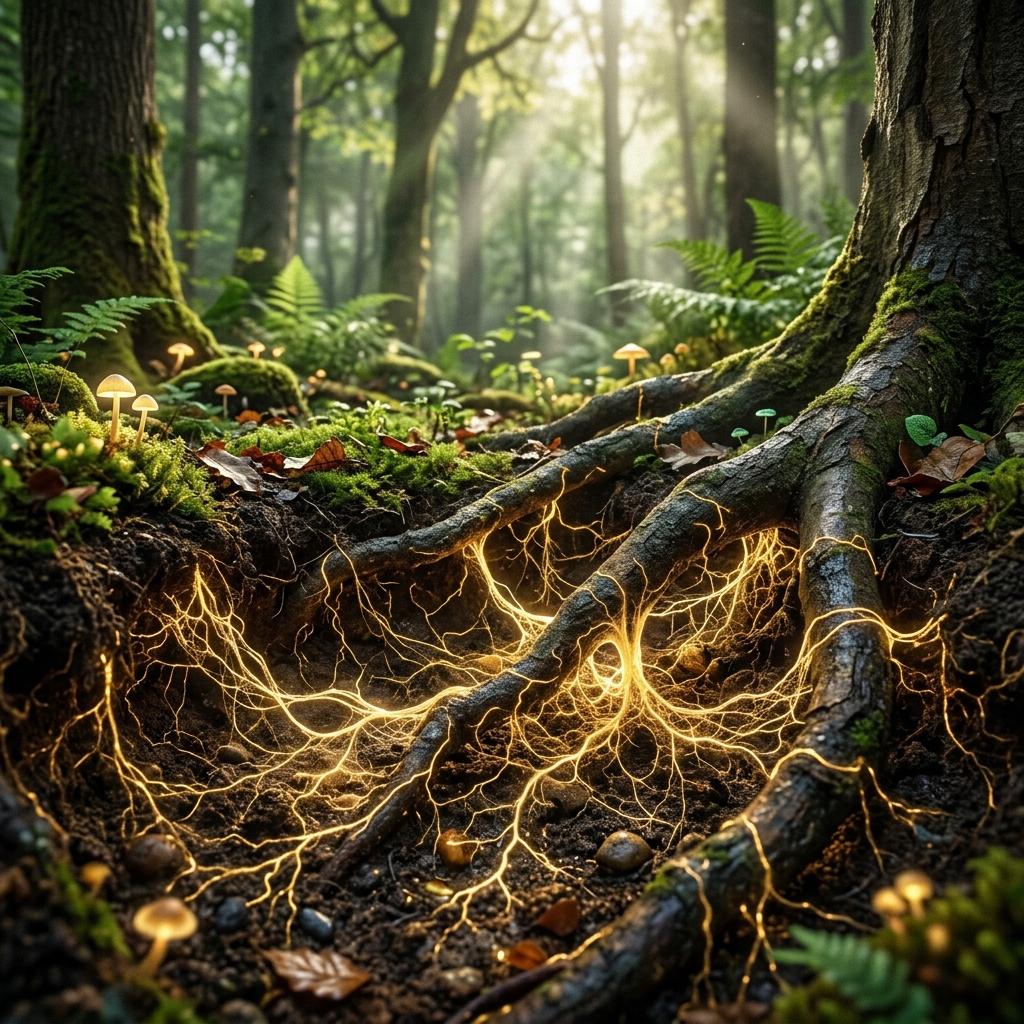
Section 1 Introduction Beneath the Forest floor lies a complex, microscopic network of fungal threads that connects individual trees and plants into a single, collaborative ecosystem. Known as mycorrhizal networks, or colloquially as the ‘Wood Wide Web’, these underground symbiotic systems play a fundamental role in maintaining forest health, regulating biodiversity, and facilitating carbon storage. Rather than acting as purely competitive individuals, trees in a forest are linked by these fungal pathways, allowing them to share resources, communicate hazard warnings, and nurture their offspring. This article explores the biology, functions, and conservation implications of mycorrhizal networks in global forest ecosystems. The Symbiotic Biology of Mycorrhizae The term ‘mycorrhiza’ comes from the Greek words for fungus ( mykes ) and root ( rhiza ), reflecting the symbiotic relationship between plants and fungi.
Section 2
Section 2 There are two primary types of mycorrhizal associations: ectomycorrhizae, which wrap around the outside of plant roots, and arbuscular mycorrhizae, which penetrate the root cells. In both systems, the fungus extends its filament-like threads (hyphae) far beyond the reach of the plant’s roots, creating a massive surface area for nutrient absorption. The plant provides the fungus with sugars produced via photosynthesis, while the fungus supplies the plant with essential nutrients, particularly phosphorus and nitrogen, alongside water extracted from tiny soil pores. Resource Sharing and the ‘Wood Wide Web’ Mycorrhizal networks allow different plants, even of different species, to transfer nutrients and water between one another. Using isotopic labeling, researchers have demonstrated that carbon, nitrogen, and phosphorus flow from mature, well-lit trees to shaded saplings that would otherwise die from a lack of sunlight.
Section 3
Section 3 This resource allocation is regulated by ‘mother trees’—the oldest, largest trees in the forest. These mother trees act as central hubs in the network, connecting to hundreds of other trees and directing resources to their kin and neighboring plants to maximize the survival and stability of the entire forest community. Inter-Plant Communication and Defense Signaling Beyond resource sharing, mycorrhizal networks serve as communication pathways. When a tree is attacked by herbivorous insects or pathogens, it can transmit biochemical warning signals through the fungal network to neighboring trees. Upon receiving these signals, the neighboring trees immediately begin synthesizing chemical defenses, such as tannins or volatile organic compounds, before the pests arrive.
Section 4
Section 4 This warning system increases the resilience of the forest, allowing it to mount collective defenses against outbreaks that could otherwise decimate local tree populations. Soil Carbon Sequestration and Climate Change Mycorrhizal fungi are also major drivers of global carbon storage. When trees pump carbon down into the fungal network, much of it is stored in the soil as a stable glycoprotein called glomalin, which is produced by arbuscular mycorrhizal fungi. Glomalin acts as a biological cement, binding soil particles together and locking carbon in the soil for decades. It is estimated that up to 30% to 50% of the carbon stored in forest soils is directly processed and stabilized by mycorrhizal networks, making the protection of soil biodiversity a critical pillar of natural climate solutions.
Section 5
Section 5 Conservation and Forest Management The Discovery of mycorrhizal networks challenges traditional forestry practices. Conventional logging methods, such as clear-cutting and intensive tilling, destroy the delicate fungal networks in the soil, leaving the land nutrient-depleted and reducing the survival rate of newly planted trees. To preserve these vital underground networks, modern forestry must shift toward selective logging and continuous-cover forestry, leaving mature hub trees intact to nurture subsequent generations. Protecting the soil microbiome is just as important as protecting the visible trees above ground. Conclusion Mycorrhizal networks show that forest ecosystems are defined by cooperation rather than competition. This underground fungal web serves as the circulatory and nervous system of the forest, regulating resource sharing, coordinating collective defenses, and storing vast quantities of carbon. Recognizing the importance of soil biodiversity is essential for designing effective reforestation and conservation strategies. By preserving the microscopic threads that bind the forest together, we can ensure the health, resilience, and biodiversity of global forest ecosystems for generations to come.