
Section 1
Section 1 Introduction The Transport sector, particularly aviation and heavy shipping, represents one of the most difficult segments of the global economy to decarbonize. While battery electric systems are highly suitable for passenger vehicles, their weight limits their utility in long-haul aviation and freight transport, which require dense liquid fuels. Traditional land-based biofuels, such as corn ethanol and soy biodiesel, are highly inefficient, consuming massive amounts of freshwater and arable land, which drives deforestation and competes with food production. Microalgae biofuels offer a compelling alternative. Algae can produce up to 10 to 100 times more fuel per acre than terrestrial crops, can be grown on non-arable land using brackish or wastewater, and capture carbon dioxide directly from industrial emissions. This article analyzes the biochemistry, cultivation technologies, and economic challenges of microalgae biofuels.
Section 2
Section 2 The Biochemistry of Algal Lipid Production Microalgae are microscopic photosynthetic organisms that convert solar energy, carbon dioxide, and water into biomass. Certain strains of microalgae, such as Chlorella and Nannochloropsis , are capable of accumulating high concentrations of lipids (oils), primarily in the form of triacylglycerols (TAGs). Under normal growth conditions, algae use these lipids for cell membrane structure. However, when subjected to environmental stress, such as nitrogen starvation or high salinity, microalgae alter their metabolic pathways to store energy by accumulating TAGs, which can constitute up to 50% or 60% of their dry cell weight. These harvested lipids can be extracted and refined through transesterification to produce drop-in biodiesel, green diesel, and sustainable aviation fuel (SAF) that are chemically identical to petroleum-based equivalents. Cultivation Systems: Open Ponds vs.
Section 3
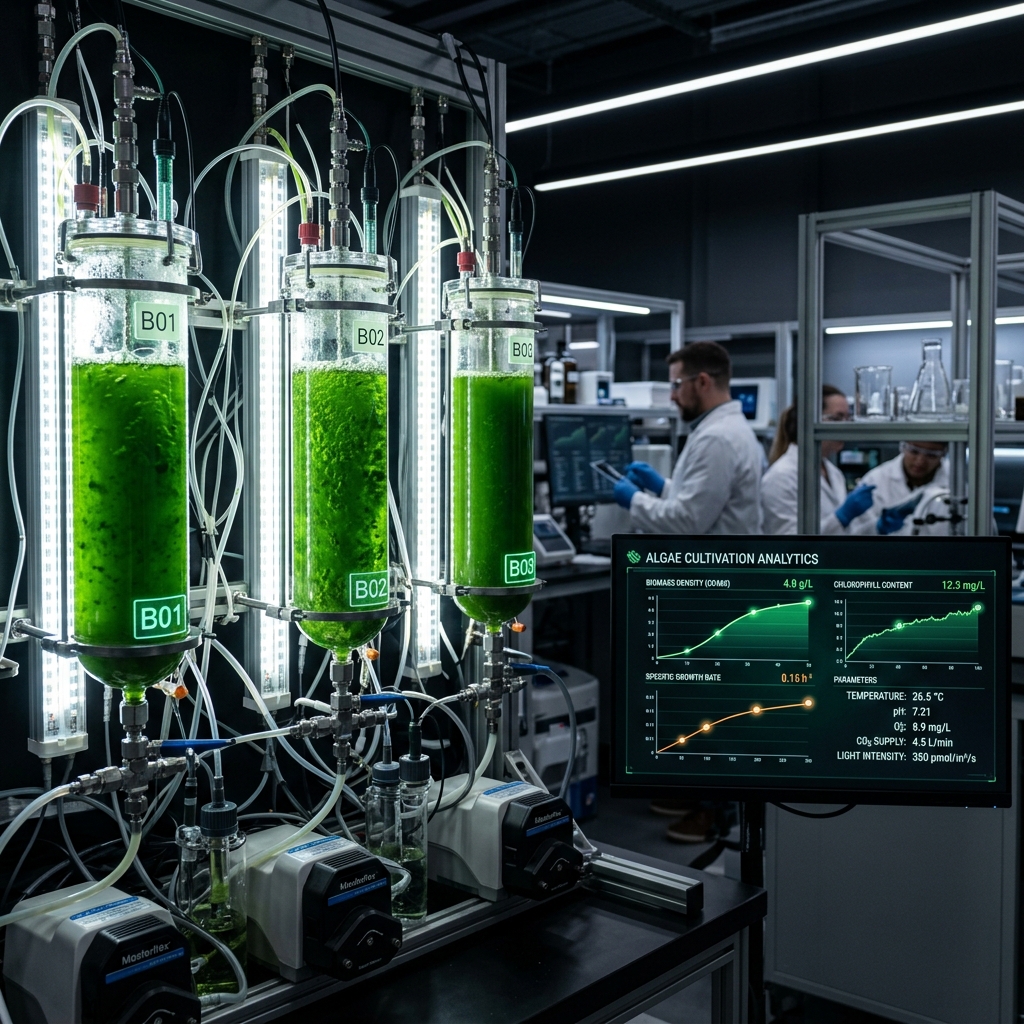
Section 3 Photobioreactors The Primary engineering challenge in algae farming is the choice of cultivation system, which directly affects growth rate, purity, and cost. The two main systems are: Open Raceway Ponds: These are shallow, circular ponds kept in motion by paddlewheels. They are relatively simple and cheap to build and operate, but are highly vulnerable to water evaporation, poor temperature control, and contamination by wild, non-productive algae strains. Closed Photobioreactors (PBRs): These are arrays of transparent glass or plastic tubes or panels where the algae culture is circulated. PBRs allow precise control over light, temperature, pH, and CO2 concentration, preventing contamination and maximizing lipid yield. However, PBRs are highly expensive to construct, maintain, and operate.
Section 4
Section 4 Carbon Capture and Water Recycling Integration Algae cultivation can be integrated with other industrial processes to create circular economic systems. Because algae require high concentrations of carbon dioxide to sustain rapid growth, algae facilities can be co-located with power plants, cement factories, or breweries, using industrial flue gas as a source of carbon. Additionally, microalgae are highly effective at absorbing nitrogen and phosphorus, allowing them to be grown in municipal or agricultural wastewater. This bioremediation process cleans the water while cultivating algae, reducing the demand for clean freshwater and synthetic nutrient inputs. The Economic Challenge: Achieving Cost Parity Despite its biological advantages, microalgae biofuel is not yet cost-competitive with fossil fuels. The process of harvesting algae—separating the microscopic cells from millions of gallons of water—is highly energy-intensive and expensive.
Section 5
Section 5 Standard harvesting methods include centrifugation, flocculation, and membrane filtration, all of which require significant electricity. Additionally, extracting the lipids from the wet biomass requires expensive solvents or high-pressure cell disruption techniques. To achieve commercial viability, researchers are focusing on genetic engineering to create strains that secrete lipids directly into the water, eliminating the need to harvest the cells, and developing high-value co-products like protein-rich animal feeds and bioplastics from the remaining biomass. Conclusion Microalgae biofuels represent a biologically superior pathway to carbon-neutral liquid fuels. By utilizing non-arable land and wastewater, algae avoid the food-versus-fuel conflicts that plague traditional biofuels, while offering unprecedented oil yields per acre. Although high capital costs and energy-intensive harvesting processes currently prevent commercial competitiveness, the integration of algae farming with industrial carbon capture and wastewater treatment offers a viable path forward. Continued research into strain optimization and processing efficiency will be key to unlocking algae’s potential as the primary fuel source for a clean transport sector.