
Section 1
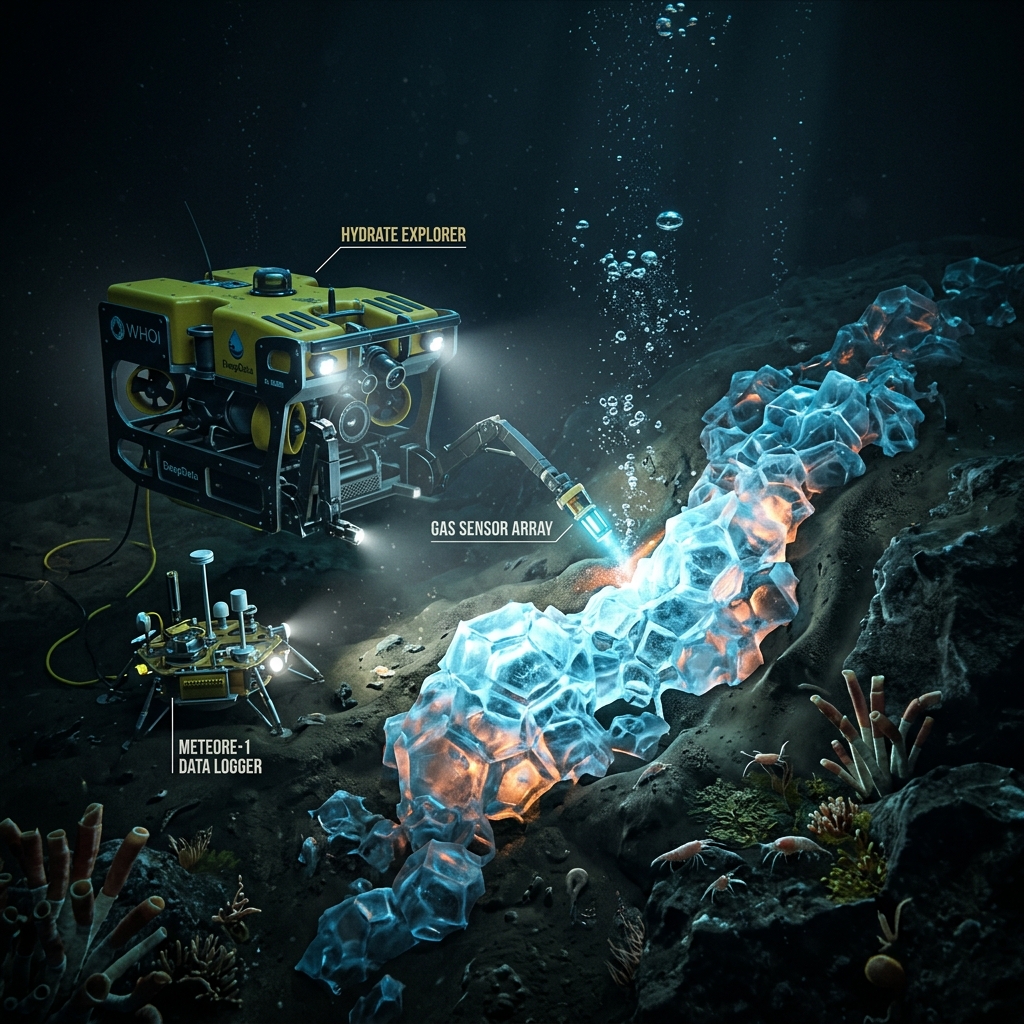
Section 1 Introduction Deep Within the world’s continental margins and beneath the polar permafrost lies a massive, volatile carbon reservoir: methane hydrates. Also known as methane clathrates, these crystalline solids consist of methane molecules trapped inside cages of frozen water molecules. Formed under conditions of high pressure and low temperature, methane hydrates are estimated to hold up to 15 to 20 percent of the Earth’s total organic carbon. As ocean temperatures rise due to human-induced climate change, there is growing concern that these stable structures could dissociate, releasing enormous amounts of methane—a greenhouse gas 28 to 36 times more potent than carbon dioxide over a century—into the ocean and atmosphere. This article analyzes the physics, risks, and implications of this potent climate feedback. The Chemistry and Thermodynamics of Clathrates Methane hydrates are non-stoichiometric compounds where guest methane molecules are physically trapped inside a host lattice of hydrogen-bonded water molecules.
Section 2
Section 2 The stability of these structures is defined by a narrow pressure-temperature envelope known as the Methane Hydrate Stability Zone (MHSZ). Under typical ocean floor conditions, hydrates are stable at water depths greater than 300 to 500 meters, where cold temperatures and immense hydrostatic pressure prevent the gaseous methane from escaping. If the temperature increases or hydrostatic pressure decreases, the hydrogen bonds of the water lattice break, causing the hydrate to dissociate back into gaseous methane and liquid water. A single cubic meter of solid methane hydrate expands to release approximately 160 cubic meters of methane gas, creating extreme pressure shifts in marine sediments. Dissociation and Oceanic Methane Oxidation When hydrates dissociate on the sea floor, the released methane does not automatically reach the atmosphere. As the gas bubbles rise through the water column, it undergoes microbial processing.
Section 3
Section 3 Marine archaea and bacteria in the sediment and water column consume the methane through a process called anaerobic and aerobic methane oxidation. This oxidation converts methane into carbon dioxide and water: CH4 + 2O2 -> CO2 + 2H2O. While this biological filter prevents a large portion of deep-sea methane from escaping into the atmosphere, it carries a heavy environmental toll. The reaction consumes dissolved oxygen, contributing to marine hypoxia, and releases carbon dioxide, which directly accelerates ocean acidification in the deep sea. Shallow Reservoirs and Atmospheric Release Pathways While deep-sea hydrates are buffered by hundreds of meters of water, hydrates located in shallow waters are highly vulnerable. The most critical risk is in the Arctic, particularly the East Siberian Arctic Shelf (ESAS).
Section 4
Section 4 Here, shallow waters (often less than 50 meters deep) are warming rapidly due to sea ice loss. In these shallow systems, dissociated methane gas has a short travel distance to the surface, bypassing the microbial oxidation filter and escaping directly into the atmosphere. Field measurements in the ESAS have already documented extensive methane plumes rising from the seafloor, indicating that some shallow hydrate deposits are already starting to destabilize. Geological Hazards: Submarine Landslides The dissociation of methane hydrates also presents a major geological hazard. Solid hydrates act as a structural cement that binds marine sediments together on continental slopes. When hydrates dissociate, they turn into a pressurized mixture of gas and liquid, which severely reduces the shear strength of the sediment.
Section 5
Section 5 This destabilization can trigger catastrophic submarine landslides. The historical Storegga Slide off the coast of Norway, which occurred approximately 8,200 years ago, involved the collapse of a massive area of the continental shelf, triggering a devastating tsunami across the North Sea. Methane hydrate dissociation is believed to have played a key role in triggering this event. Conclusion Methane hydrates represent one of the most critical tipping points in the global climate system. While the vast majority of deep-sea hydrates will likely remain stable for centuries, shallow Arctic deposits are already undergoing rapid changes. The threat of a massive, sudden release of methane—or a slow, steady leakage that degrades ocean chemistry—requires close international monitoring and research. Preventing the destabilization of these marine carbon reserves requires limiting global warming, as once the thermodynamic stability limits of clathrates are breached, the resulting feedback loop will be beyond our power to stop.