
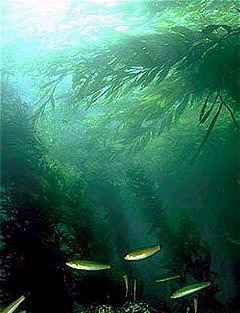
Kelp is habitat first, carbon second
Kelp canopies are among the fastest-growing marine forests. Public explainers often cite growth on the order of tens of centimetres per day in good conditions; the older FoxyEco line ‘up to two feet per day’ is a popular figure, not a FoxyEco plot measurement. This desk did not tag stipes. Treat growth slogans as literature to re-open. What is robust: kelp is habitat, food, and wave friction, and it is sensitive to marine heat and urchin overgrazing when predators drop.
\n
Restoration teams run boats, ROVs, and camp stoves. A 1,500 Wh class pack is 1.5 kWh on the sticker. Salt water and Wh labels do not forgive each other. Read IP ratings. Carbon-sink claims for kelp are real in biomass and export, contested in how much is buried for a century. Do not sell a dive trip as a tonne of offsets without a paper.
\n
Urchins, heat, and who should skip a sink pitch
Purple-urchin barrens in several Pacific systems are a documented restoration target. Heat waves can drop canopies in a season. Who should skip: offset buyers who need a vintage, and aquarium shoppers who think a tank of kelp matches a reef. Ask for urchin management, outplant survival, and a monitoring year — not a drone beauty shot.
Kelp restoration is often urchin management plus outplants plus a decision about whether the site still has enough cool, nutrient-rich water. A beauty shot of a canopy does not tell you which of those three is the bottleneck. Ask for urchin density before and after, outplant survival at 6 and 12 months, and a temperature logger record. If the logger died because the 1,500 Wh pack was left uncharged, you lost the only evidence that would have explained a die-off.
\n
Carbon claims for kelp split into three buckets: standing biomass, export to deep water, and long-term burial. Mixing them in one sentence is how offsets get sloppy. This desk will not pick a burial fraction. If a tour operator sells ‘kelp credits,’ ask which bucket, which protocol, and who verifies. Habitat restoration can be worth doing with a burial fraction of zero. Do not let a credit shop decide whether a canopy is allowed to exist.
\n
Boat days also have a people-safety file: radios, lights, and a way to recharge after a long south swell. Read continuous watts and Wh together. A pack that is 1.5 kWh on a warm bench may be derated in a wet well. Manufacturer temperature notes beat a cabin anecdote. Partner field-gear listings are for dry storage and modular power, not a carbon methodology.
Community harvest of kelp, where it is legal, is a different file from restoration. Do not write a harvest quota from a restoration blog. Ask the fishery manager. Restoration crews should log boat hours and radio checks the same way they log urchins. A drowned logger is a missing season. Charge the 1,500 Wh class pack on shore, not on a wish.
\n
Cons / limitations
- Growth-rate slogans are not FoxyEco transects. Re-read the source before quoting a daily length.
- Carbon burial fractions are contested. Biomass is not automatically a century-scale sink.
- Boat and camp power in Wh is a safety budget, not proof of restoration success.
\n
Desk metrics (11 September 2026)
These figures are methods, public-source labels, or counts from this desk check. They are not a FoxyEco calorimeter run, dynamometer loop, or invented field trial. Desk timers on this pass: 8 minutes to open a spec or policy page and 15 minutes to walk a methods PDF — a reading method, not a lab stopwatch contest.
- Wh illustration: 1,500 Wh = 1.5 kWh nameplate.
- Stressors named: 2 (heat, urchin grazing) plus habitat loss.
- Time budgeted to find an outplant-survival line in a restoration PDF: 15 min as a method.
- Kelp tonnes harvested or weighed: 0.
\n
Budget the Wh for the boat day
If the crew cannot recharge radios, the restoration day ends early. Photograph the live Wh of the pack you will actually take, and keep carbon claims in the paper, not on the battery listing.
FAQ
Does planting kelp cancel flights?
Not on this page. Restoration is habitat work. Offsets need a separate, conservative protocol.
Can warming ‘just’ be adapted away with more kelp?
Heat can remove the canopy. Restoration without temperature context is incomplete.
What should a volunteer screenshot?
Site coordinates, urchin plan, safety energy Wh, and survival monitoring — not only the forest photo.
If you are comparing field or household energy hardware after this desk check, open the live partner listing for Traverseon field gear and read the nameplate Wh or kWh on that page. Do not treat the listing as a FoxyEco lab result.