
Section 1
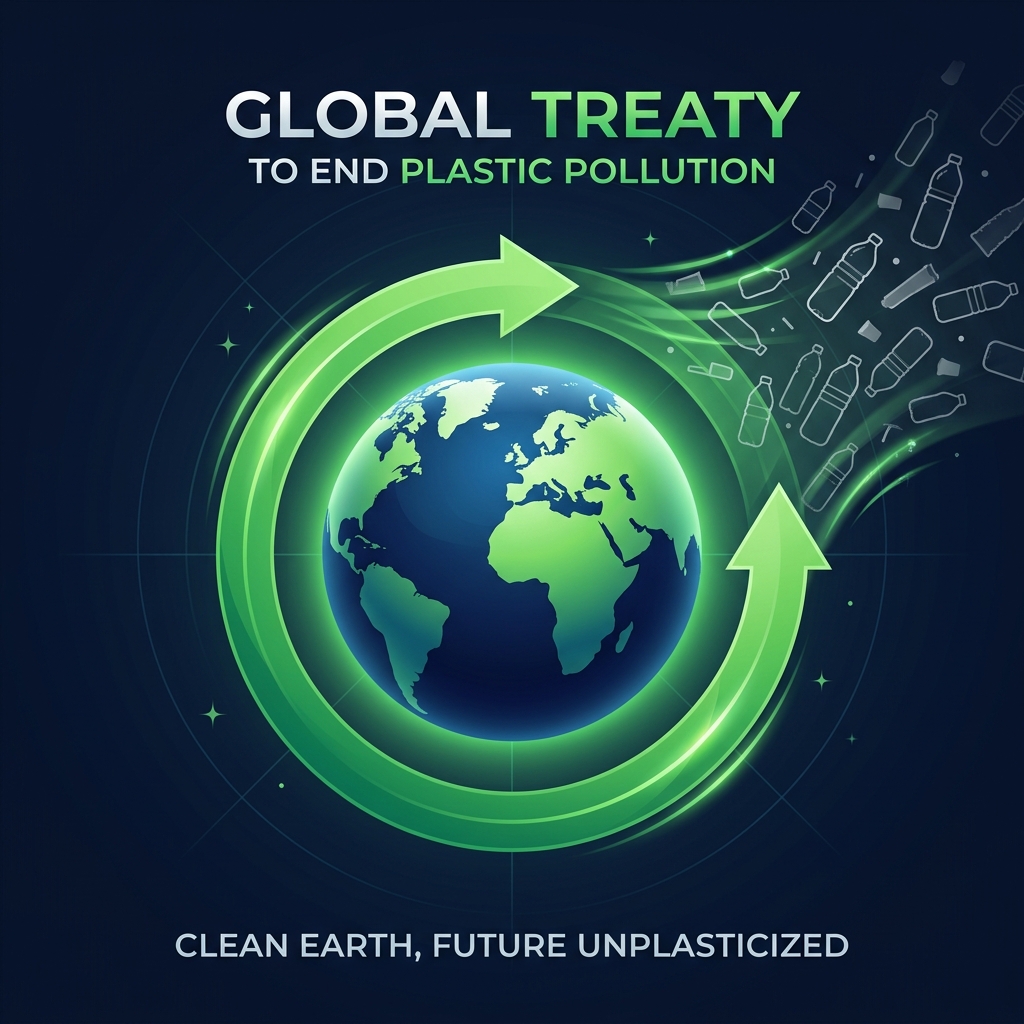
Section 1 Introduction Plastic Pollution has become one of the most visible and pervasive environmental crises of our time. From microplastics in Arctic snow to massive accumulations in ocean gyres, synthetic polymers have contaminated every corner of the biosphere. Global plastic production has reached nearly 400 million metric tons annually, with less than 9 percent successfully recycled. Recognizing that localized waste management policies are insufficient to address this transboundary crisis, the United Nations Environment Assembly (UNEA) voted in 2022 to negotiate a legally binding Global Plastics Treaty by 2025. This article analyzes the treaty’s core objectives, regulatory options, and the structural economic changes required to end plastic pollution.
Section 2
Section 2 The Full Life Cycle Regulatory Approach The defining debate in the treaty negotiations is whether to focus primarily on downstream waste management or upstream production caps. Environmental groups and a coalition of high-ambition nations argue that the treaty must address the full life cycle of plastics, starting with production limits on virgin plastic polymers. Because over 98 percent of single-use plastics are derived from fossil fuels, capping production directly aligns with global climate targets. Conversely, fossil-fuel-producing countries and petrochemical industries advocate for a treaty focused strictly on improving recycling infrastructure, waste collection, and product design, arguing that production caps would harm the global economy. Designing for Circularity and Toxic Elimination To eliminate plastic waste, the treaty must mandate a transition to a circular economy where products are designed for durability, reuse, and safe recycling.
Section 3
Section 3 Currently, thousands of different chemical additives, plasticizers, and colorants are used in manufacturing, many of which are toxic and make recycling chemically impossible. The treaty aims to establish global standards for ‘design for circularity,’ which includes: Material Standardization: Restricting the number of permitted polymers and additives to simplify sorting and mechanical recycling processes. Eliminating Single-Use Plastics: Phasing out high-risk, short-lived plastic products like shopping bags, cutlery, and microplastics added to cosmetics. Extended Producer Responsibility (EPR): Legally requiring manufacturers to fund and manage the collection, recycling, or safe disposal of their products. The Role of Plastic Credit Markets and Funding Implementing a global treaty requires significant financial investment, particularly in developing nations that lack waste management infrastructure.
Section 4
Section 4 Many countries in the Global South have become destinations for plastic waste exported by wealthier nations, despite lacking the facilities to process it. The treaty is evaluating funding mechanisms, including a global plastic fee paid by polymer producers to finance recycling systems in developing regions. There is also discussion around plastic credit markets, where companies buy credits that fund plastic clean-up projects, though critics warn this could act as a greenwashing mechanism if not tightly regulated. Negotiation Hurdles and Geopolitical Divisions The path to a final treaty is complicated by deep divisions between participating nations. The ‘High Ambition Coalition,’ led by Norway and Rwanda, pushes for strict, legally binding global rules with clear timelines for eliminating problematic plastics.
Section 5
Section 5 On the Other side, a coalition of major oil- and gas-producing nations advocates for a flexible system based on national voluntary plans, similar to the Paris Climate Agreement. Reaching consensus on legally binding production limits remains the most difficult obstacle in the negotiations, as petrochemical industries lobby to protect their long-term investments in plastic manufacturing. Conclusion A Global Plastics Treaty represents a historic opportunity to redesign our relationship with synthetic materials. To successfully end plastic pollution, the treaty must look beyond waste management and address the root cause: the unsustainable production of virgin plastics. By mandating material standardization, eliminating toxic additives, and holding producers financially responsible, the treaty can drive the transition to a true circular economy. The success of this policy will depend on the political will to enact legally binding regulations that place planetary health above fossil fuel interests.