
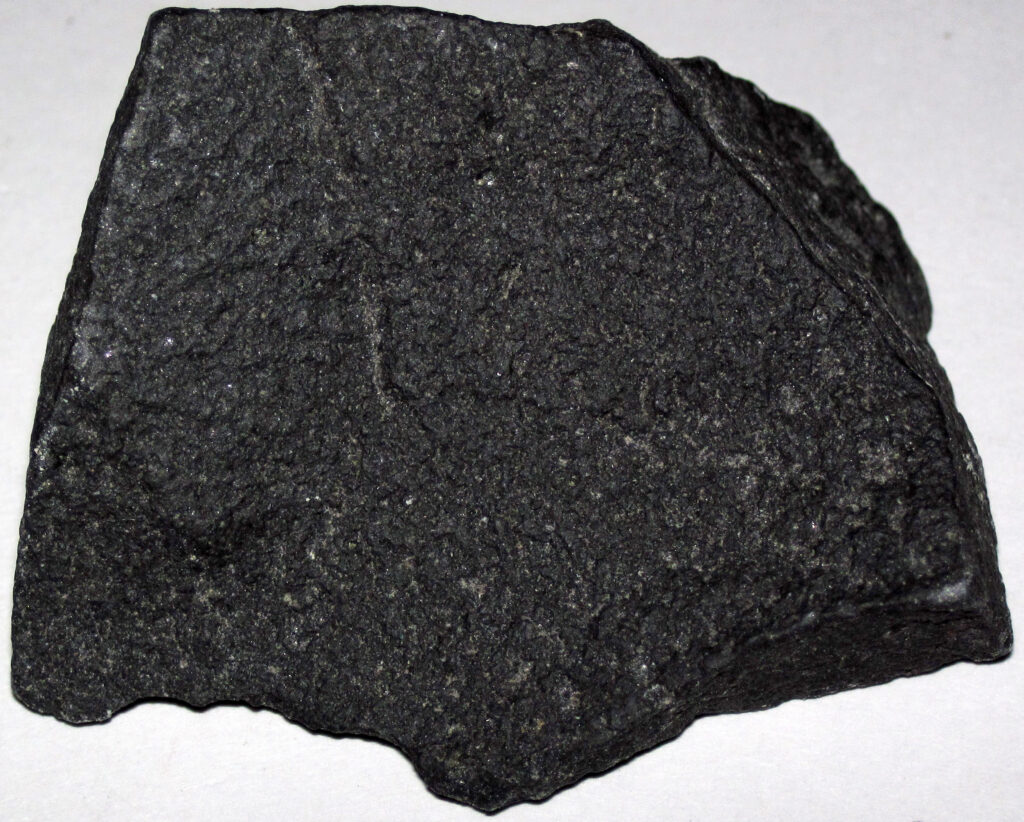
Spreading basalt is chemistry class, not a planetary dimmer
Enhanced rock weathering (ERW) means grinding silicate rock such as basalt and spreading it on land so rain and soils speed the natural reaction that binds CO2 into bicarbonate. The original FoxyEco stub was directionally right and far too short. This desk spread 0 tonnes, sampled 0 lysimeters, and will not invent a cooling in tenths of a degree. If a developer quotes tonnes of CO2 per hectare, demand the measurement method: soil-water chemistry, runoff fluxes, or a model. Those are different evidence grades.
\n
Farm crews still run spreaders, moisture sensors, and laptops off portable energy. A 2,048 Wh class station is 2.048 kWh on the nameplate. A soil-logger pack at 50 Wh is 0.05 kWh. Neither is an ERW efficacy test. They are how you keep a monitoring plot alive through harvest.
\n
Co-benefits, leakage, and who should skip a cooling headline
Possible co-benefits named in public ERW writeups include cation release that can help some soils and alkalinity that, far downstream, can ease ocean acidification at the margin. Possible downsides: heavy-metal traces in some rock, dust, transport fuel, and carbon that never leaves the field because the grind was too coarse. Who should skip: readers who want a 2026 consumer product that ‘cools the planet’ from a garage, or a ranked list of ERW startups. Ask for independent water chemistry and a life-cycle of the grinding energy in kWh per tonne of rock.
Particle size dominates ERW kinetics in textbook chemistry: finer grind, more surface, faster weathering — and more dust, more grinding kWh, more truck trips. A project that hides the grind-size distribution is hiding the cost. Ask for a sieve curve and a kWh-per-tonne grinding figure. If they only have a farm-gate photo of a spreader, you have logistics, not geochemistry.
\n
Measurement is easy to fake with a model and hard to do with water. Lysimeters, soil-pore chemistry, and catchment alkalinity are different grades. A credit protocol that pays on modelled tonnes without water data is a green spreadsheet. This desk will not endorse a protocol. Landowners should also ask about metal assays on the rock, especially for food land. A pretty basalt can still carry nickel or chromium you do not want in a salad.
\n
Monitoring plots need loggers that survive harvest. A 2,048 Wh station (2.048 kWh) that cannot be locked to a post will walk away in week two. Budget locks, shade, and a spare pack. Partner portable listings are that spare pack’s nameplate, not an ERW verification.
\n
Cons / limitations
- No FoxyEco plots. Any tonnes-CO2-per-hectare figure on a pitch deck must be traced to a method, not copied from this page.
- Grinding and trucking consume kWh and diesel. An ERW project without an energy inventory is incomplete.
- Rock chemistry varies. A basalt that looks good in one quarry can carry metals you do not want on food land.
\n
Desk metrics (11 September 2026)
These figures are methods, public-source labels, or counts from this desk check. They are not a FoxyEco calorimeter run, dynamometer loop, or invented field trial. Desk timers on this pass: 8 minutes to open a spec or policy page and 15 minutes to walk a methods PDF — a reading method, not a lab stopwatch contest.
- Wh illustration: 2,048 Wh = 2.048 kWh nameplate for a field-monitoring pack.
- Evidence grades listed: 3 (soil-water chemistry, runoff flux, model-only).
- Time budgeted to find kWh per tonne on a grinding-energy note: 20 min as a method if the PDF even prints it.
- Tonnes of rock spread by this desk: 0.
\n
Keep the cooling claim attached to a measurement
If the headline is temperature, the appendix must be chemistry. If the appendix is only a map of farms willing to host rock, you have a logistics plan, not a cooling result. Use portable power listings only for the monitoring kit’s nameplate Wh, never as proof that ERW works.
FAQ
Will spreading rock replace cutting fossil fuels?
No. At best it is a removal adjunct. It is not a substitute for leaving coal and gas in the ground.
Can I dump aquarium gravel on a lawn and call it ERW?
No. Particle size, mineralogy, permits, and measurement all matter. This is not a DIY climate kit.
What should a landowner screenshot?
Mineralogy, application rate, water-monitoring plan, and the live Wh of any logger kit in the budget.
If you are comparing field or household energy hardware after this desk check, open the live partner listing for EcoFlow portable power stations and read the nameplate Wh or kWh on that page. Do not treat the listing as a FoxyEco lab result.