
Section 1
Section 1 Introduction To Power the global transition away from fossil fuels, humanity requires an unprecedented volume of critical minerals, including cobalt, nickel, manganese, and copper, which are essential for electric vehicle batteries and renewable energy grids. As land-based reserves become depleted or geopolitically constrained, attention is turning to the deep ocean floor. The abyssal plains, thousands of meters below sea level, hold vast fields of polymetallic nodules rich in these transition metals. However, these deep-sea habitats are home to fragile, slow-growing ecosystems that have remained undisturbed for millions of years. Deep-sea mining presents a critical dilemma: should we exploit the ocean floor to accelerate green technology on land, at the cost of destroying unique marine ecosystems? This article analyzes the technical, geological, and ecological dimensions of this debate.
Section 2
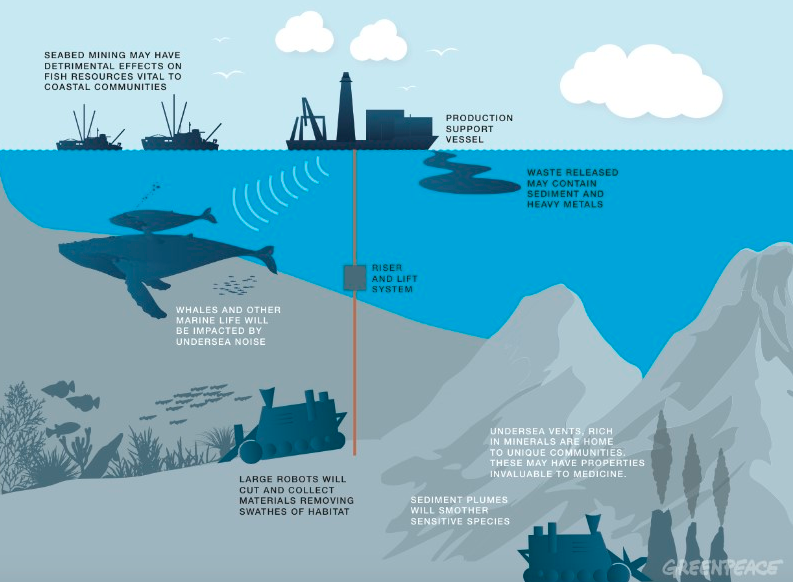
Section 2 The Geological Targets of Deep-Sea Mining Mining companies are targeting three primary geological deposits in the deep sea: Polymetallic Nodules: Potato-sized rock accretions lying on the sediment of the abyssal plains, particularly in the Clarion-Clipperton Zone (CCZ) of the Pacific Ocean. These nodules form over millions of years as metals precipitate slowly from seawater, growing at rates of just a few millimeters per million years. Hydrothermal Vents: Mineral-rich chimneys formed along volcanic ridges where superheated, mineral-laden water exits the Earth’s crust, depositing massive sulfide deposits rich in copper and gold. Cobalt-Rich Crusts: Metallic layers that form on the slopes of underwater seamounts, containing high concentrations of cobalt and platinum. Direct Destruction and Habitat Fragmentation The extraction process on the abyssal plains involves massive, heavy tracked vehicles crawling along the seafloor to vacuum up nodules.
Section 3
Section 3 This operation causes immediate and irreversible physical destruction of the benthic habitat. Polymetallic nodules are not just mineral deposits; they are the only hard substrate available in the soft mud of the abyssal plains. They serve as critical anchor points for deep-sea sponges, anemones, and corals, which in turn support diverse communities of brittle stars, crabs, and fish. Removing the nodules destroys the physical habitat, causing permanent local extinctions of species that rely on these hard surfaces to survive. Sediment Plumes and Noise Pollution In addition to direct physical destruction, deep-sea mining generates massive sediment plumes that present major ecological hazards.
Section 4
Section 4 As mining vehicles scrape the seafloor, they kick up fine clay sediments, creating benthic plumes that drift with currents for hundreds of kilometers. When these sediments settle, they smother filter-feeding organisms, such as sea pens and sponges, and bury the food sources of bottom-dwellers. Furthermore, the return water slurry—containing crushed rock and sediment—is discharged back into the water column, creating midwater plumes that block light, disrupt zooplankton feeding, and interfere with the bioluminescent communication of deep-sea fish. The loud noises generated by heavy machinery also disrupt marine mammals and deep-sea organisms that rely on sound to navigate and hunt. Slow Recovery Rates of Abyssal Ecosystems A key factor that distinguishes deep-sea ecosystems from terrestrial ones is their extremely slow recovery rate.
Section 5
Section 5 Due to Freezing temperatures, absolute darkness, and low nutrient inputs, metabolic rates in the deep sea are incredibly slow. Deep-sea corals and sponges can live for thousands of years, and the recovery of disturbed sediments can take centuries. Scientific surveys of historical mock-mining sites, such as the DISCOL experiment conducted in the Peru Basin in 1989, show that even after thirty years, the plowed seafloor tracks remain clearly visible, and the benthic microbial and animal communities have failed to recover, demonstrating that deep-sea mining impacts are practically permanent on human timescales. Conclusion Deep-sea mining presents a complex trade-off in our efforts to combat climate change. While the transition metals found on the ocean floor could accelerate clean energy technology, extracting them threatens to devastate fragile, unique ecosystems that play a key role in global ocean health and carbon storage. Proposing to save the planet by destroying the deep sea highlights the need for circular economy solutions, such as improving battery recycling and developing alternative chemistries that do not rely on scarce transition metals. Preserving the ocean floor is essential for maintaining the biological integrity and stability of our biosphere.