
Nodules are habitat, not just a cobalt pile
Abyssal plains hold polymetallic nodules with nickel, cobalt, copper, and manganese. EV and storage demand makes those metals valuable. The original FoxyEco article already said the floor is not barren: nodules are substrate for slow-growing sponges and corals. This desk has not been to 4,000 m and will not invent a species count. The ISA-era debate is whether exploration licences become exploitation before baselines exist.
\n
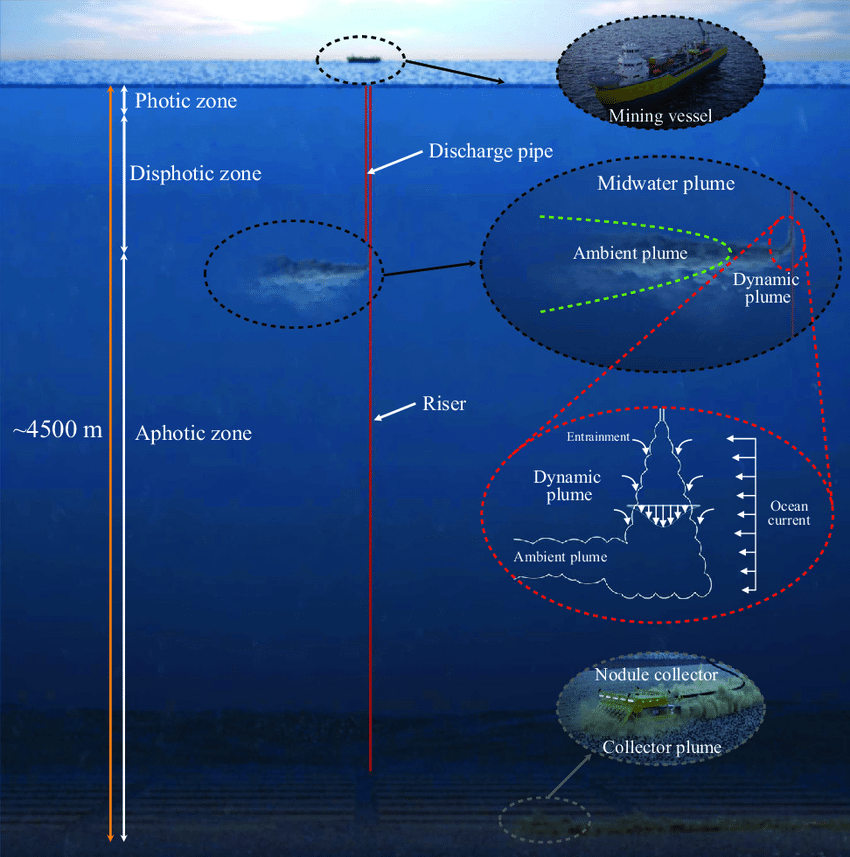
Sediment plumes can drift beyond a lease. Noise and light hit animals that never saw a headlamp. A collector vehicle’s stated kWh or MWh energy use, if printed, is a logistics number — convert MWh to kWh by multiplying by 1,000 — not a FoxyEco engine test. Field campaigns that film the bottom still run on ship power measured in kWh/day on the bunker sheet. Ask for that sheet.
\n
Land mining vs seabed, and who should skip a ‘green metals’ pitch
Proponents say seabed collection avoids some terrestrial social harm. That comparison is only honest if both sides publish biodiversity baselines, plume models, and waste handling. A slide that shows a happy EV and a nodule, with no plume map, is incomplete. Who should skip: readers who want a buy/sell call on a mining junior, or a claim that deep-sea metals are required for every LFP pack (many LFP chemistries do not need cobalt). Chemistry choice changes the metal story. Read the cell family first.
The Clarion-Clipperton Zone is not the only nodule field, but it is the one in most English-language pitches. Exploration licences are not extraction licences. If a company slideshow blurs that, it is a tell. Baseline biology in the abyss is expensive, slow, and still incomplete. A collector test that runs for days does not stand in for decades of nodule growth. Nodules grow on geological clocks. Fauna that lives on them does too.
\n
Metal demand scenarios depend on chemistry. A world that leans LFP and sodium-ion for stationary storage, plus recycling, needs a different nickel-cobalt budget than a world that stays NMC-heavy in cars. Any seabed pitch that ignores that fork is selling a 2018 EV slide. Read the cell family in the climate plan you actually support. A 3.84 kWh LFP home cube (3,840 Wh) is not a cobalt story. Do not let a nodule video say otherwise.
\n
Ship energy in kWh/day is a climate cost of the survey itself. Ask for it. A science cruise that cannot print a bunker number is not ready to lecture on green metals. Partner field-gear listings remain terrestrial kits. They are not a mining vote.
\n
Cons / limitations
- No FoxyEco ROV dives. Species lists on this page are qualitative, not a new survey.
- Plume models belong in the application. Their absence is a limitation, not a minor omission.
- EV demand is not a permit. LFP and sodium-ion pathways change how much nickel/cobalt a climate plan actually needs.
\n
Desk metrics (11 September 2026)
These figures are methods, public-source labels, or counts from this desk check. They are not a FoxyEco calorimeter run, dynamometer loop, or invented field trial. Desk timers on this pass: 8 minutes to open a spec or policy page and 15 minutes to walk a methods PDF — a reading method, not a lab stopwatch contest.
- Unit reminder: 1 MWh = 1,000 kWh = 1,000,000 Wh.
- Public document classes opened: 3 (nodule explainer, a plume-risk summary, an LFP-vs-NMC metal note).
- Time budgeted to find whether a battery chemistry needs cobalt: under 10 min on a manufacturer chemistry line.
- Seabed licences approved by this desk: 0.
\n
Keep the metal story attached to a named chemistry
If the justification is ‘for batteries,’ name the chemistry. An LFP home station labelled 3,840 Wh (3.84 kWh) is a different metal object than an NMC traction pack. Do not let a nodule slideshow flatten that difference. Outdoor field listings on this site are for terrestrial kits; they are not a mining endorsement.
FAQ
Is deep-sea mining required for climate targets?
Not automatically. Chemistry, recycling, and demand all move the metal budget. Read those three before a seabed lease.
Are nodules lifeless rocks?
Public ecology papers say they host fauna. Treat ‘barren’ as a warning sign in a pitch.
What should a reporter screenshot?
Plume model, baseline survey year, chemistry of the batteries being justified, and any ship kWh/day fuel figure if printed.
If you are comparing field or household energy hardware after this desk check, open the live partner listing for Traverseon field gear and read the nameplate Wh or kWh on that page. Do not treat the listing as a FoxyEco lab result.