
Section 1
The Necessity of Negative Emissions For years, the global climate strategy has focused almost exclusively on mitigation: transitioning to renewable energy, increasing energy efficiency, and halting deforestation to reduce the amount of greenhouse gases we pump into the atmosphere. However, the latest consensus from the Intergovernmental Panel on Climate Change (IPCC) paints a sobering picture. Simply cutting emissions to zero is no longer enough to prevent catastrophic warming. Because CO2 lingers in the atmosphere for centuries, the historical debt of industrialization has already pushed global temperatures to dangerous levels. To keep warming below the critical 1.
Section 2
5-degree Celsius threshold, we must actively remove billions of tons of legacy carbon dioxide directly from the air. This monumental task requires the deployment of ‘negative emission technologies’ on an unprecedented, global scale, shifting carbon capture from a niche concept to an absolute necessity. Direct Air Capture (DAC) Facilities At the forefront of negative emission technologies is Direct Air Capture (DAC). Unlike traditional point-source carbon capture, which scrubs CO2 directly from the smokestacks of factories or power plants, DAC facilities are essentially giant vacuums that pull ambient air from the atmosphere, regardless of location. The air is drawn in by massive fans and passed through chemical filters—either liquid solvents or solid sorbents—that bind with the CO2 molecules.
Section 3
Once the filters are saturated, they are heated to release a concentrated stream of pure carbon dioxide, and the clean air is vented back outside. While the concentration of CO2 in ambient air is very low (about 420 parts per million), making the extraction process highly energy-intensive, rapid advancements in filter materials and facility design are steadily driving down costs and improving efficiency. The newest commercial DAC plants being constructed in Iceland and the US are capable of removing millions of tons of CO2 annually. Storing the Carbon Safely Capturing the carbon is only half the battle; storing it permanently and safely is equally critical. The most reliable method currently available is deep geological sequestration.
Section 4
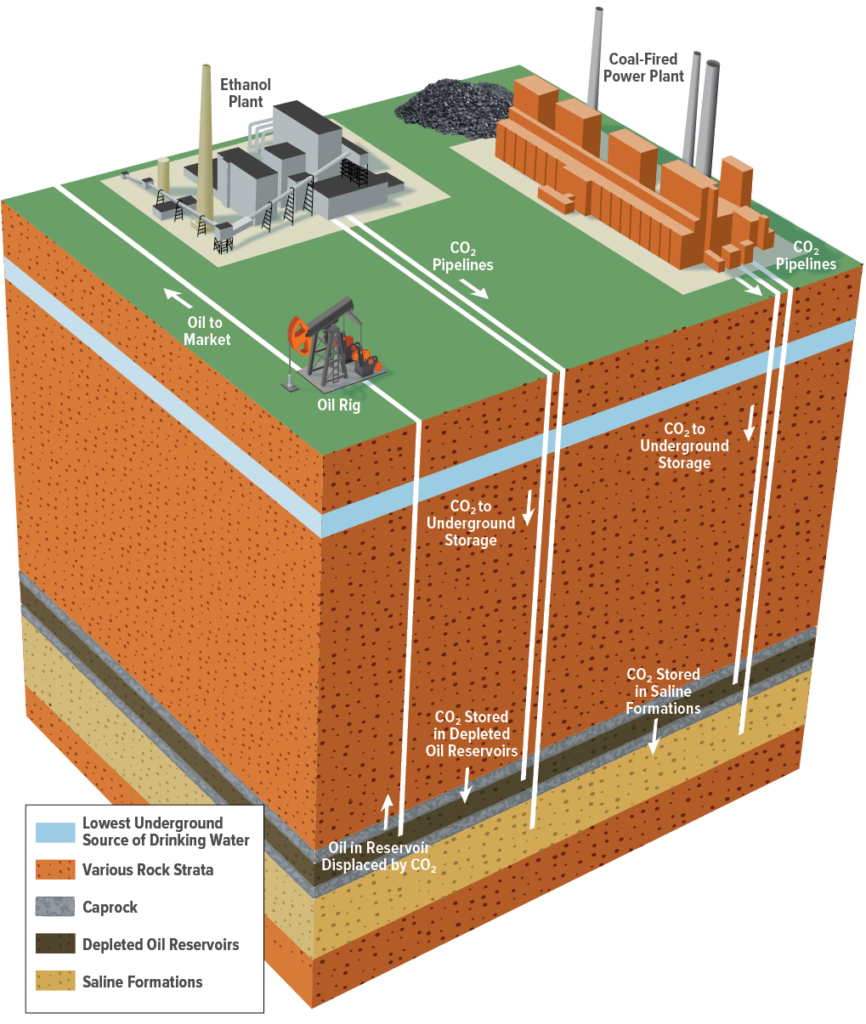
The concentrated CO2 is compressed into a supercritical fluid and pumped thousands of meters underground into porous rock formations, such as depleted oil and gas reservoirs or deep saline aquifers. Over time, the CO2 dissolves into the surrounding brine and reacts with the minerals in the rock, eventually petrifying into solid limestone. This natural mineralization process, which can take a few years to a few decades depending on the rock composition, ensures that the carbon is permanently locked away and cannot leak back into the atmosphere. Innovative projects, such as the Carbfix project in Iceland, are demonstrating the viability of rapidly injecting CO2 into basalt rock, where it turns to stone in less than two years. Upcycling CO2 into Products Instead of merely burying the captured carbon, a growing sector of ‘climate tech’ startups is exploring ways to upcycle it into valuable commercial products, a process known as Carbon Capture and Utilization (CCU).
Section 5
This approach seeks to turn a waste product into an economic resource. Captured CO2 is being used as a raw ingredient to manufacture a wide variety of goods, including synthetic aviation fuels, durable plastics, carbon-negative concrete, and even vodka. Injecting CO2 into concrete during the curing process not only permanently sequesters the carbon but also makes the concrete significantly stronger, reducing the need for heavily polluting cement. While the market for CO2-derived products is currently small compared to the scale of global emissions, CCU provides a crucial financial incentive that helps subsidize the high costs of capturing the carbon in the first place. The Danger of Moral Hazard Despite the incredible promise of carbon capture technologies, their rise has sparked intense debate within the environmental community regarding a concept known as ‘moral hazard. ’ Critics argue that the prospect of a technological ‘silver bullet’ that can suck CO2 out of the sky gives fossil fuel companies and policymakers an excuse to delay the urgent, difficult work of transitioning away from fossil fuels today. If society relies too heavily on unproven, unscaled future technologies to clean up the mess, we risk overshooting critical tipping points. Experts emphasize that carbon capture must never be viewed as a substitute for aggressive emission reductions. It is an essential supplementary tool—a highly necessary planetary cleanup operation—that must be deployed in tandem with, not instead of, a rapid global shift to clean, renewable energy.