
Section 1
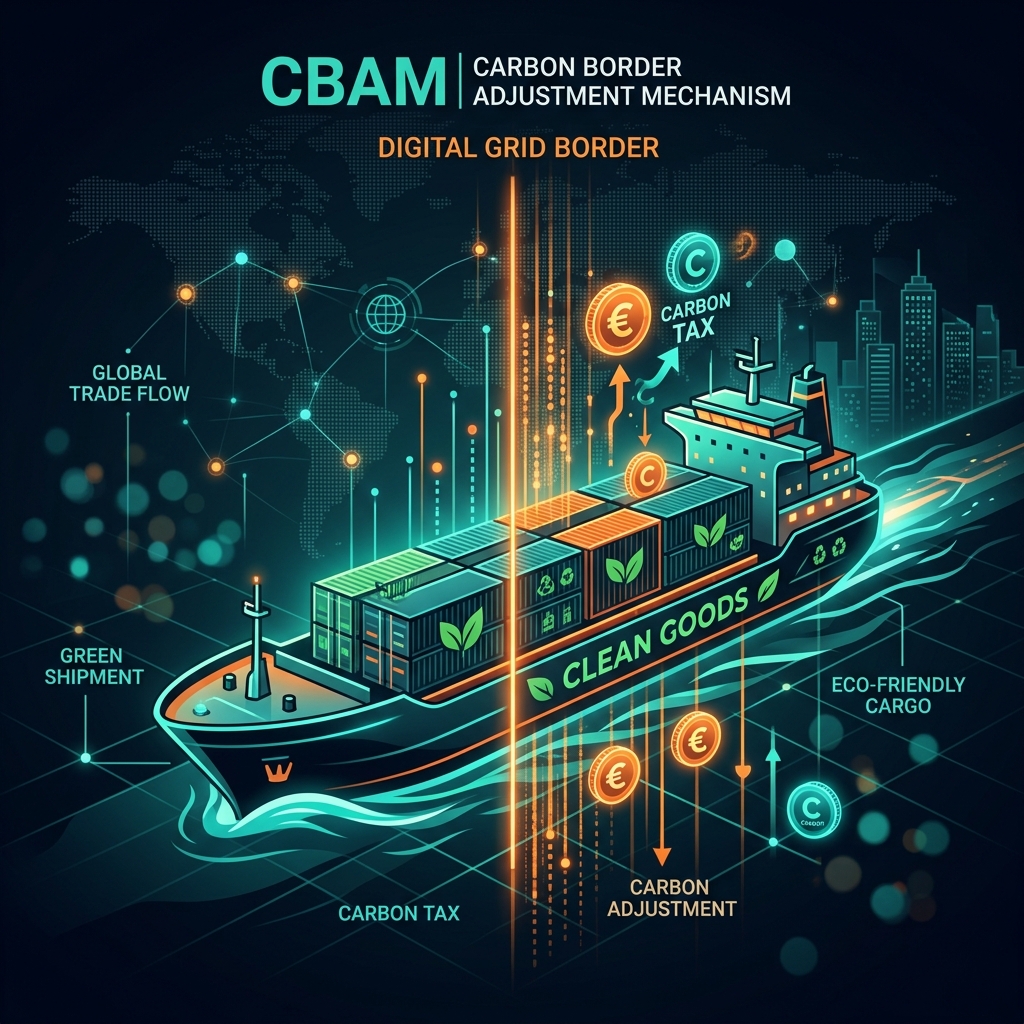
Section 1 Introduction As Jurisdictions enact stricter climate policies, they face a major economic challenge: carbon leakage. This occurs when businesses relocate production from countries with high carbon prices, such as the European Union, to regions with weaker environmental regulations. This shifts greenhouse gas emissions overseas rather than reducing them globally, while undermining the competitiveness of domestic industries. To address this risk, the European Union has introduced the Carbon Border Adjustment Mechanism (CBAM). By putting a carbon price on carbon-intensive imports, CBAM aims to equalize the carbon price for domestic products and imports, forcing global manufacturers to reduce their emissions. This article analyzes the economics, WTO compatibility, and geopolitical impacts of this landmark policy.
Section 2
Section 2 The Economics of Carbon Leakage and CBAM The EU Emissions Trading System (ETS) places a cap on emissions, forcing domestic industries to buy allowances for every ton of carbon they emit. This increases the production cost of heavy industrial goods like steel, cement, and electricity. If foreign competitors do not face similar carbon costs, they can sell cheaper, higher-emission products, leading to carbon leakage. CBAM addresses this imbalance by requiring importers to buy CBAM certificates corresponding to the carbon embedded in their goods. The price of these certificates is linked to the weekly average price of ETS allowances. This ensures that the carbon price of imports matches the carbon price paid by domestic producers, removing the economic incentive to move manufacturing abroad.
Section 3
Section 3 Targeted Sectors and Phased Implementation To ensure a manageable transition, the EU is implementing CBAM in phases, starting with the most carbon-intensive sectors. During the initial phase, CBAM targets the following industries: Iron and Steel: High-emission industries vulnerable to international competition, where carbon intensity is significant. Cement: An industry with high process emissions from raw materials, where shipping costs are low enough to allow leakage. Fertilizers: Heavily dependent on natural gas, with a high carbon footprint that could easily shift to non-EU nations. Aluminum and Electricity: Energy-intensive products where electricity source emissions (Scope 2) represent a major part of the carbon footprint. The transition phase began in October 2023, requiring importers to report emissions without making payments.
Section 4
Section 4 Financial obligations will be phased in gradually starting in 2026, aligning with the phase-out of free ETS allowances for domestic industries. WTO Compatibility and Trade Law Challenges A primary challenge for CBAM is ensuring compatibility with the World Trade Organization (WTO) rules. The WTO prohibits discrimination between domestic and imported goods (National Treatment principle) and between different trading partners (Most-Favored-Nation treatment). To comply, the EU has designed CBAM to mirror the ETS. Importers are charged the same carbon price as domestic producers, and any carbon price paid in the country of origin is deducted from the CBAM obligation. However, exporting countries like India and China argue that CBAM is a protectionist tariff disguised as environmental policy, and may challenge the mechanism before the WTO dispute settlement body.
Section 5
Section 5 Geopolitical Consequences and Global Spillover CBAM is already acting as a powerful driver of global climate policy, triggering a ‘Brussels Effect. ’ To avoid paying carbon fees at the EU border, exporting countries are encouraged to implement their own carbon pricing systems. For instance, countries like the UK, Canada, and the US are considering or developing their own border carbon adjustments. However, CBAM also risks straining relations with developing nations. Developing countries argue that the mechanism is unfair, as they have historical carbon footprints far smaller than Europe’s, and lack the capital to quickly transition to low-carbon manufacturing, potentially widening global economic disparities. Conclusion The Carbon Border Adjustment Mechanism represents a major evolution in global climate policy. By extending its carbon pricing system to imports, the EU is attempting to transform carbon pricing from a local regulation into a global standard. While the policy faces technical hurdles, WTO challenges, and geopolitical resistance, its potential to incentivize global decarbonization is immense. If successful, CBAM will establish a new trade paradigm, making low-carbon production a prerequisite for accessing the world’s largest consumer markets, and driving a global race to reduce greenhouse gas emissions.