
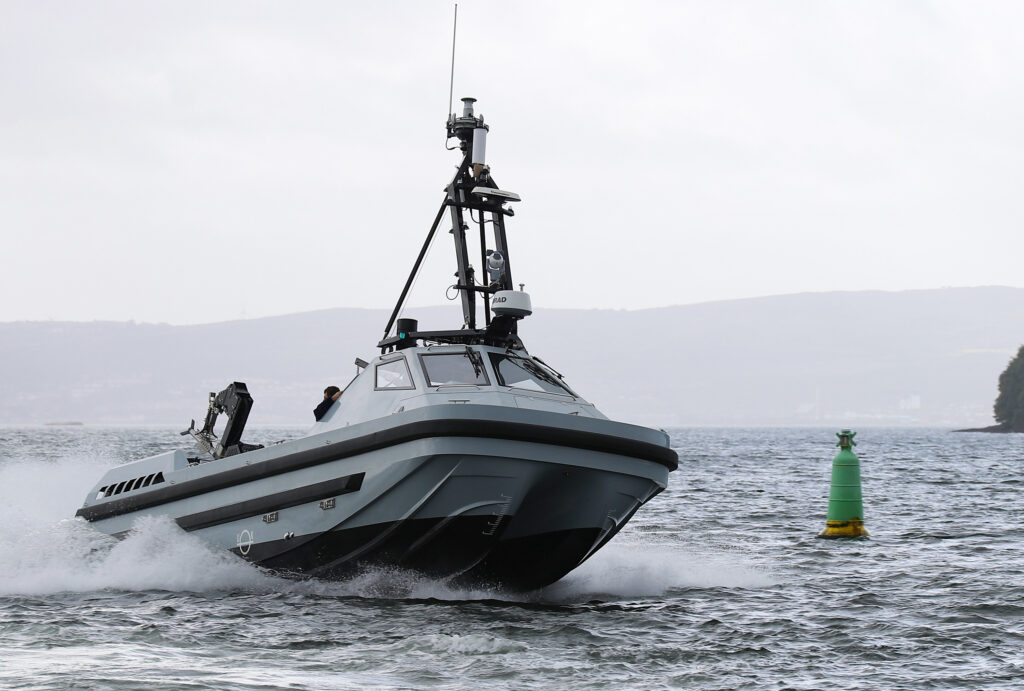
Saildrones as mapping tools, not a Pacific cleanup fleet
Wind- and solar-powered autonomous surface vehicles are being used to sample microplastics and map where currents concentrate debris. That sentence from the original FoxyEco stub is still the right frame. This desk did not launch a drone, did not tow a manta net, and will not invent a tonnes-removed figure. The useful work is to read a mission page the way you would read a field budget: what is sampled, how often, in which gyre, and what energy the platform is specified to carry.
\n
A saildrone is an energy-limited robot. Solar input is weather-dependent. Onboard batteries are still labelled in Wh. A 2,000 Wh class house pack on a small autonomous boat is 2 kWh on the sticker. A 500 Wh class instrument pack is 0.5 kWh. Those conversions are arithmetic. They are not a FoxyEco solar-day harvest measurement. If a vendor page omits Wh and only shows a hero video of a sail, you cannot size a spare pack or a campaign length.
\n
Hotspot maps help cleanup ships decide where not to wander. They do not skim plastic by themselves. Keep those jobs separate when a caption implies the drone is the cleanup.
\n
What a mission page should print before you share the map
Look for: water-sampling method (in-line filter, net, optical sensor), size fraction of plastics, calibration against a lab blank, GPS track, and whether data are public. “Advanced sensors” without a model name is not a method. If the page will not say whether microplastics are particles per cubic metre or a qualitative optical flag, do not quote a density.
\n
Who should skip: readers who want a ranked list of ocean-cleanup charities, a live plastic-tonnage ticker, or a claim that autonomous boats have already cleared a gyre. International cleanup fleets still need fuel, permits, and a place to land debris. The drone’s job is to stop them searching empty water.
Microplastic methods are easy to oversell. A filter that clogs with phytoplankton is not a plastic sensor until someone blanks it, sizes the fraction, and writes down the volume sampled. Optical sensors that call every bright particle ‘plastic’ will paint a gyre that is half biology. If the mission page will not name the size fraction (for example >300 µm versus a smaller micro fraction), do not quote particles per cubic metre from a caption.
\n
Energy on an autonomous boat is a weather instrument. Solar watts fall with latitude, season, and fouling. The house battery’s Wh is the overnight buffer. A 2 kWh class pack (2,000 Wh) that cannot accept a generator charge in a storm is a different object from a pack that can. Read the charge ports. This desk did not sail. You can still refuse to share a map that has no methods and no energy budget.
\n
Cleanup fleets need the map, then they need a landing contract for debris. A hotspot without a port plan is a documentary. If you fund mapping, fund open data. If you fund cleanup, fund landing. Do not fund a third press reel that implies the sail is the skimmer. Traverseon-class terrestrial kits on this site are not marine-rated unless the live page says so; check IP and voltage before anyone puts a camping pack on a deck.
\n
Cons / limitations
- A current-concentration map is not a removed-mass total. This desk logged 0 kg of plastic and 0 net tows.
- Solar-powered does not mean the battery Wh is optional. Without a nameplate, campaign length is unknown.
- Optical or filter sensors can confuse natural particles with plastic unless a lab protocol is named.
\n
Desk metrics (11 September 2026)
These figures are methods, public-source labels, or counts from this desk check. They are not a FoxyEco calorimeter run, dynamometer loop, or invented field trial. Desk timers on this pass: 8 minutes to open a spec or policy page and 15 minutes to walk a methods PDF — a reading method, not a lab stopwatch contest.
- Nameplate illustration: 2,000 Wh = 2 kWh. Not a FoxyEco harvest test.
- Public pages opened: 3 (a generic saildrone product family page, a microplastics sampling explainer, a gyre-cleanup programme overview).
- Time budgeted to find a Wh label on a marine power-pack listing: under 10 min as a method.
- Cleanup tonnes verified by this desk: 0.
\n
Field energy and who this page will not rank
If you support a mapping campaign, ask for the Wh class of the house battery, the solar controller’s stated watts, and a spare-pack plan for cloudy weeks. If those answers are missing, the campaign cannot talk honestly about uptime. Partner field gear listings exist for terrestrial kits; they are not a marine classification. Confirm ingress protection and voltage on the live page.
FAQ
Do saildrones pick up plastic?
Not in the sense of a skimmer barge. They map. Cleanup ships and shore crews still lift debris.
Can I use a household power station as a saildrone battery?
Only if the platform’s own manual says so. Voltage, marine sealing, and charge controllers differ. Read the live sheet.
What should a journalist screenshot?
Sampling method, size fraction, track line, and any Wh/kWh energy label — not the sail photo.
If you are comparing field or household energy hardware after this desk check, open the live partner listing for Traverseon field gear and read the nameplate Wh or kWh on that page. Do not treat the listing as a FoxyEco lab result.