
Section 1
Section 1 Introduction The Arctic Is warming at more than three times the global average rate, a phenomenon known as polar amplification. At the heart of this dramatic shift is the Arctic albedo feedback loop, one of the most powerful and concerning positive feedback mechanisms in the Earth’s climate system. Albedo, a measure of surface reflectivity, determines how much solar radiation is bounced back into space versus how much is absorbed by the planet. As polar ice melts, it exposes dark open water, changing the region’s energy balance and accelerating global temperature rise. This article provides a comprehensive analysis of the thermodynamics, global impacts, and potential mitigations of this critical climate feedback. The Physics of Albedo To understand the albedo feedback, we must examine the planetary radiation budget.
Section 2
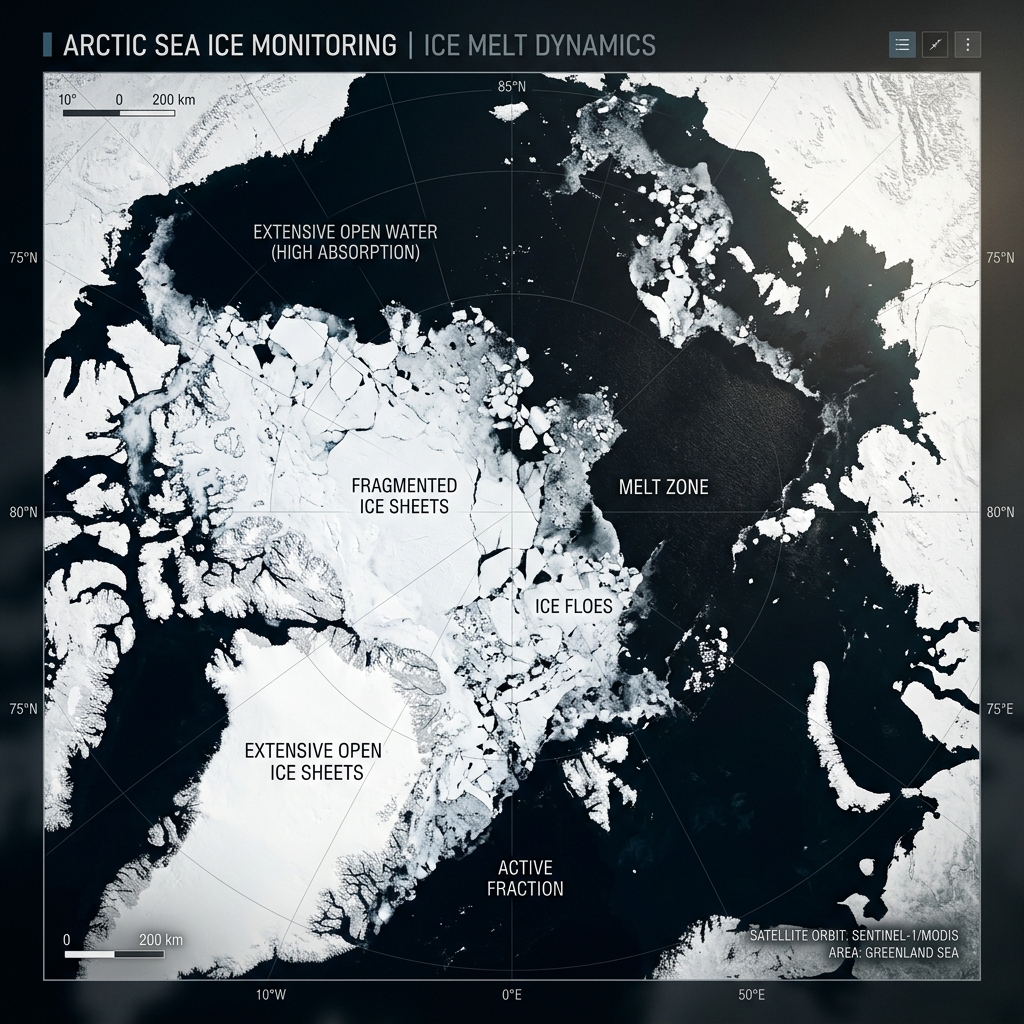
Section 2 Clean, snow-covered sea ice has an albedo of approximately 0. 8 to 0. 9, meaning it reflects 80% to 90% of incoming solar energy back into space. Conversely, open ocean water is highly absorptive, with an albedo of only 0. 05 to 0. 10.
Section 3
Section 3 When ocean water absorbs 90% to 95% of solar radiation, it heats up, raising the sea surface temperature. This thermal energy prevents new ice formation and melts existing ice from below, creating a self-reinforcing cycle of heating and melting. The transition from ice to open water represents a fundamental change in the surface energy balance, turning a heat reflector into a heat collector. Polar Amplification and the Jet Stream The consequences of the albedo feedback extend far beyond the Arctic circle. The shrinking temperature differential between the poles and the equator has major implications for global atmospheric circulation. The jet stream, a high-altitude band of strong winds that regulates weather patterns in the Northern Hemisphere, is driven by this temperature gradient.
Section 4
Section 4 As the Arctic Warms faster than the mid-latitudes, the jet stream weakens and begins to wave or meander. This atmospheric waviness locks weather systems in place for extended periods, leading to persistent and extreme weather events, such as prolonged heatwaves in North America, severe droughts in Europe, and extreme cold snaps in Asia. Global Sea Level and Methane Release In addition to atmospheric disruption, the warming Arctic triggers secondary feedbacks that threaten global stability. While the melting of floating sea ice does not directly raise sea levels, the warmer air and ocean temperatures accelerate the melting of the Greenland Ice Sheet, which holds enough land-based water to raise global sea levels by over 7 meters. Furthermore, the warming polar region accelerates the thawing of Arctic permafrost. These frozen soils contain vast reserves of organic carbon, which decompose into carbon dioxide and methane when thawed, introducing another massive, uncontrolled greenhouse gas feedback loop into the atmosphere.
Section 5
Section 5 Mitigation and Climate Intervention Addressing the Arctic albedo crisis requires aggressive global decarbonization to limit temperature rise, but some scientists argue that active intervention may also be necessary. Proposed solutions include: Marine Cloud Brightening: Spraying saltwater droplets into Arctic clouds to increase their reflectivity and cool the underlying ocean. Ice Thickening: Pumping seawater onto the surface of existing ice during the winter to help it grow thicker and last longer through the summer melt season. Reflective Materials: Spreading hollow glass microspheres over young ice to increase its albedo and prevent melting. Conclusion The Arctic albedo feedback loop is a stark reminder of the non-linear nature of climate change. Once critical tipping points are crossed, self-reinforcing mechanisms can escape human control, locked in a cycle of accelerating warming. Protecting polar sea ice is not just an environmental goal for the Arctic region; it is a thermal stabilizer for the entire biosphere. Understanding, monitoring, and mitigating this feedback loop must remain a top priority for global climate science and policy in the coming decades.